
UNCOMMONS
Making a difference through politics by making our politics about ideas.

Nate Erskine-Smith
-
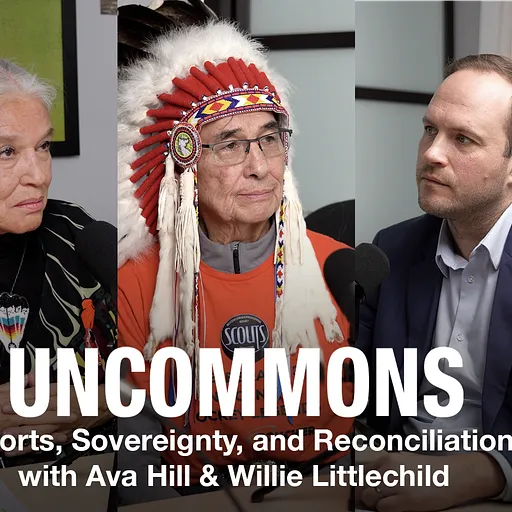
Sports, Sovereignty, and Reconciliation
Willie Littlechild was a commissioner for the Truth and Reconciliation Commission, Ava Hill was the Elected Chief of the 56th and 57th Six Nations Elected Council.
Nate Erskine-SmithWillie Littlechild was a commissioner for the Truth and Reconciliation Commission, Ava Hill was the Elected Chief of the 56th and 57th Six Nations Elected Council.
Today marks the tenth anniversary of the Truth and Reconciliation Commission’s final report. We’ve seen significant albeit imperfect progress since and there’s much more for us to do together.
On this episode of Uncommons, I’m joined by Ava Hill and Willie Littlechild, two incredible Indigenous leaders. We talk about the state of reconciliation and what real partnership could and should look like, with a specific focus on their work to advance Indigenous participation in sport.
Ava Hill is a former Six Nations Chief, and Willie Littlechild is a former TRC commissioner, former MP, and residential school survivor.
-
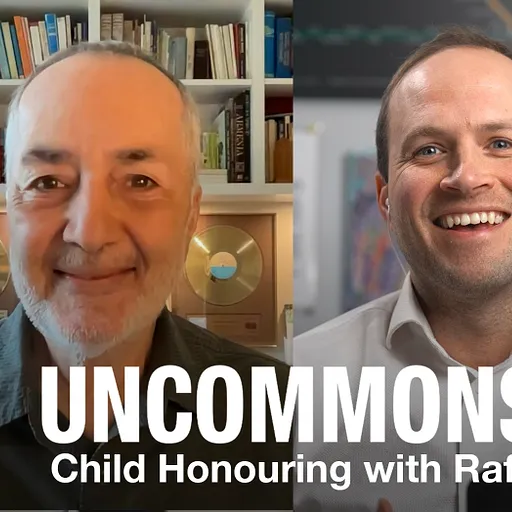
Child honouring with the one and only Raffi
Nate is joined by the great troubadour Raffi for a wide-ranging discussion about his music, advocacy, and the importance of child honouring
Nate Erskine-SmithNate is joined by the great troubadour Raffi for a wide-ranging discussion about his music, advocacy, and the importance of child honouring
Like many Canadians, Nate grew up on Raffi’s music. On this episode, Raffi joins Nate to discuss his musical journey, his ongoing advocacy for the peace and the planet, and why we need to centre children in our decision-making through his philosophy of child honouring. You can learn more about that philosophy via the “Raffi Foundation for Child Honouring”, but the idea is to emphasize the importance of respect, joy, and purpose in children’s lives and its potential to transform society.
They also touch on Raffi’s advocacy against fascism, the power of music in activism, the urgent need for climate mobilization, protecting children from digital harm and his belief in having courage to speak out and be engaged in democracy.
Raffi is a global troubadour, children’s entertainer, author and founder of the Raffi Foundation for Child Honouring. Called by the Washington Post as “the most popular children’s singers in the English-speaking world”.
-

What to make of the Canada-Alberta MOU
It’s both a collaborative document at a critical time and unfortunate climate backsliding absent more ambitious action to come.
Nate Erskine-SmithIt’s both a collaborative document at a critical time and unfortunate climate backsliding absent more ambitious action to come.
Only a week later and there’s already been a lot of ink spilled on the Canada-Alberta Memorandum of Understanding that covers economic and energy cooperation.
And it’s generated wildly different reactions.
Here are my thoughts on what the MOU means, for better and worse. There are merits to collaboration, of course. At the same time, talk of a grand bargain feels like déjà vu, and this government needs a clear-eyed ambitious climate plan.
You can read the full text below.
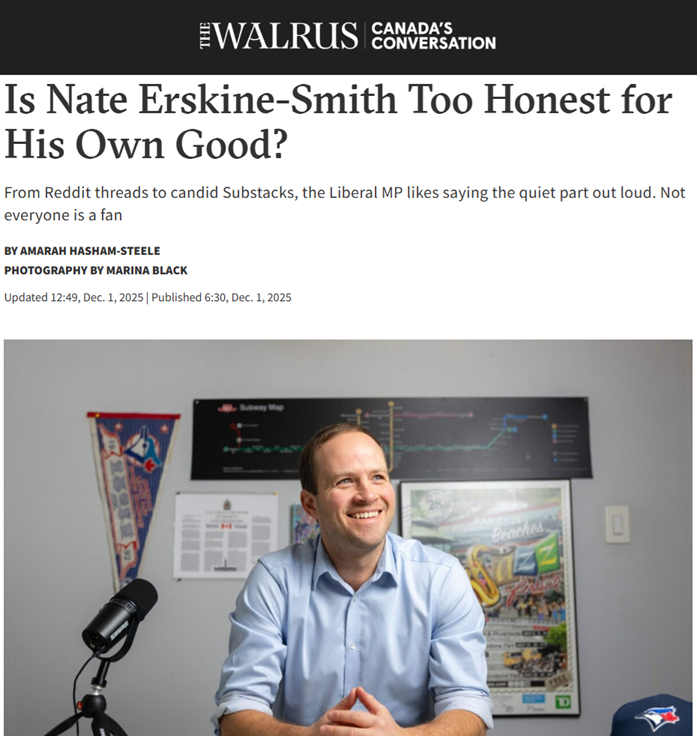
It’s my own honest assessment (seems fitting after this article in The Walrus), but worth acknowledging there have been a range of different takes so far. The National Observer’s Max Fawcett, Evan Scrimshaw at Unscripted, and Clean Prosperity’s Michael Bernstein all offer more positive takes. Meanwhile, it not only prompted Guilbeault’s resignation, but those of two top climate advisers on our Net Zero Advisory Body. And former Minister (and recent podcast guest) Catherine McKenna has reinforced these concerns too.
Recent Uncommons episodes
Best-selling author, historian, and progressive activist Rutger Bregman joined me to talk about his new book Moral Ambition (and new school of the same name), a call to arms to stop wasting one’s talent and dedicate oneself to solving big challenges.
Award-winning journalist and author Tanya Talaga joined us for a live event focused on her recent book The Knowing. It’s a deeply personal story in which she traces her own family’s history, and it is a story of Indigenous people in Canada, injustice, reclamation, and outlasting.
Upcoming guests include the amazing troubadour Raffi and Indigenous leaders Ava Hill and Willie Littlechild. If you have suggestions for guests or topics, you can always reach us at [email protected]
In case you missed it
I wrote about the reaction to my budget reaction here, and reflected on the role of MPs and reasonable disagreement in our politics.
And The Walrus also wrote a profile about our approach to politics, highlighting the benefits and challenges of authenticity and honesty as we work to make our politics about ideas. And no, not a usual headline/question for a politician ha.
Grand bargains, déjà vu, and a review of the Canada-Alberta MOU
What should we make of the memorandum of understanding between Canada’s Prime Minister and Alberta’s Premier?
Well, it’s certainly caused wildly different reactions across the spectrum. Danielle Smith was booed by her base at mere mention of the MOU, and environmental champion Steven Guilbeault resigned his cabinet post based on his strong opposition to the deal.
So what does the deal do exactly?
On the one hand, at a high level, it’s a collaborative document in a moment when national unity is critical. It’s an attempt by the feds to buy political peace with Alberta, to address a sense of western alienation, to diversify our conventional energy exports from the US, and yes, to secure a less confrontational path to some climate action.
But less action than one might have expected, if we’re being honest. We gave up a lot – probably too much – for any short-term peace. It represents climate backsliding and a distraction from the ambition we need.
In fairness, let’s start at the start. The MOU’s preamble tells us that Alberta and Canada are “committed to achieving net zero greenhouse gas emissions by 2050”, establishing Canada as a global energy superpower,” and respecting Indigenous rights-holders.
It then sets out a series of mostly laudable objectives, from cutting red tape to providing economic opportunities for Indigenous communities. The main and obvious tension is the goal to “increase production of Alberta oil and gas while simultaneously reaching carbon neutrality.”
Is it possible? Well, in theory, maybe.
The idea is that so long as the world relies on fossil fuels, Canada should reap the economic benefits. And there’s a logic to that, of course. Better us than the United States or other countries with poor human rights records.
But it’s also true that it’ll be a real challenge to make the intensity of oil sands emissions globally competitive for those final barrels. Knowing this, the MOU ties a potential new pipeline through northern BC directly to a massive carbon capture and storage project. The downside is that it’ll cost billions in public subsidies, and experts call the tech “expensive, unproven” and a distraction “from global decarbonization efforts while allowing the oil and gas industry to conduct business as usual.”
The truth is that in a future net zero world, there isn’t a strong business case for new fossil fuel infrastructure today. The oil and gas sector is already our largest single source of emissions, and a significant expansion of production is likely only viable in a non-net zero world.
Which seems to be what the MOU is betting on because that’s what it commits to – a significant expansion of oil production and export of at least one million barrels a day above the status quo of over 4 million barrels, through a combination of a new potential pipeline and expanded capacity on Trans Mountain. The only trans rights Premier Smith seems to support.
Still, it’s fair for the private sector to bet on that world, and the feds have said that there won’t be public money for any new pipeline. That’s the right answer and we should ensure that it doesn’t happen indirectly through loan guarantees.
It’s also fair for governments to approve weak private sector bets so long as the environment and Indigenous rights are protected and respected. Which is where the proposal will likely fall down, in the face of BC and Indigenous opposition.
At the same time, while companies are free to bet on runaway climate change, it’s incumbent on governments to take ambitious climate action seriously. Does the MOU get us there? Not nearly enough.
On the positive side of the ledger, Alberta commits to the construction of large transmission interties with BC and Saskatchewan. That’s good.
Alberta also commits to an industrial carbon price of $130 per tonne and methane rules in exchange for Canada doing away with the oil and gas emissions cap and giving Alberta a carve out from national clean electricity regulations.
The industrial price of $130 is well below the $170 federal benchmark and the methane regs have been ready to implement for a year now, with a view to slashing 75% of emissions by 2030. That timeline’s now pushed back to 2035.
The Canadian Climate Institute warned that the MOU could trigger a race to the bottom on climate policy and the Pembina Institute called it a “missed opportunity” opening the door to delayed climate action and investor uncertainty.
It’s hard to understand where on the path to net zero all of this leaves us. After dropping the consumer carbon price, winding down Greener Homes, and pausing the EV mandate, there were already gaps in our plan that hadn’t been made up.
And now there are additional gaps to fill. So, what’s the plan? We can’t manage what we don’t measure.
And yes, I understand that the instinct for someone who had a front row seat to Brexit is to work together, to get buy-in from provinces, to establish a Grand Bargain as it were. Of course it is.
But we gave up a lot – probably too much – for whatever short-term political peace we’ll benefit from. After all, the last grand bargain was the $35 billion Trans Mountain pipeline in exchange for Alberta’s commitment to carbon pricing and climate action, in part to address western alienation.
And almost a decade later, it’s déjà vu all over again.
Except with even less time to act with the sense of urgency required to build the sustainable future we deserve.
The energy transition will happen with or without us, and we can’t afford any distractions. We need a clear-eyed ambitious plan for net zero to become a clean energy superpower and because the carbon budget won’t balance itself.
As a wise former central banker once wrote: “Value in the market is increasingly determining the values of society. We are living Oscar Wilde’s aphorism – knowing the price of everything but the value of nothing – at incalculable costs to our society, to future generations and to our planet.”
Or take this from our platform in the spring: “as we build the strongest economy in the G7, we cannot lose sight of the impact our choices will have on our children and grandchildren; we must always be mindful of long-term sustainability and the kind of economy and environment we want for them.”
Words and promises we would do well to heed.
-
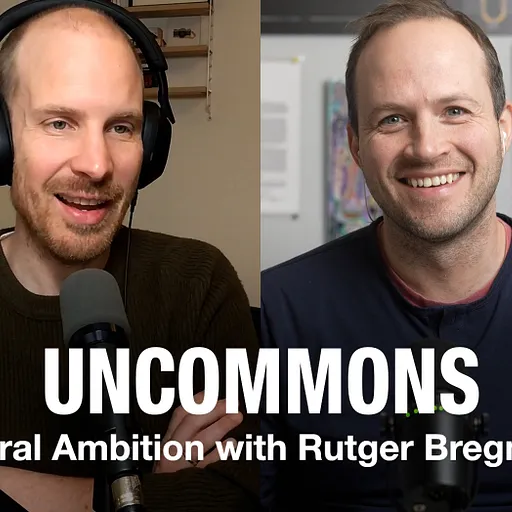
Moral Ambition with Rutger Bregman
Nate is joined by Rutger Bregman, Dutch historian and author of “Moral Ambition: Stop Wasting Your Talent and Start Making a Difference.”
Nate Erskine-SmithNate is joined by Rutger Bregman, Dutch historian and author of “Moral Ambition: Stop Wasting Your Talent and Start Making a Difference.”
Rutger Bregman is a Dutch historian, best-selling author, and co-founder of the School for Moral Ambition. His recent book and school both encourage us to spend our time and talent by making a difference on the greatest challenges and injustices of our time, rather than solely personal comfort and financial gain.
Rutger joins me in this episode to explore how his ideas on moral ambition connect to social change, the big challenges we need your talent to solve, and what he hopes to accomplish with his new school.
-

The Knowing with Tanya Talaga
Award-winning author and journalist Tanya Talaga joins Nate for a discussion about her latest book.
Nate Erskine-SmithAward-winning author and journalist Tanya Talaga joins Nate for a discussion about her latest book.
Tanya Talaga is an award-winning author and journalist and a powerful voice for Indigenous rights and education in Canada.
She’s also a constituent, which is how we happened to connect again recently when she was hosted by the House Speaker together with other finalists for the Shaugnessy Cohen Prize in political writing.
Talaga joined me a number of years ago at the Fox Theatre to talk about her 2017 award-winning book Seven Fallen Feathers.
This conversation focuses on her recent book, The Knowing. It is a deeply personal story in which she traces her own family’s history, and it is a story of Indigenous people in Canada, injustice, reclamation, and outlasting.
With her own background one of both Anishinaabe and Polish descent, Talaga writes: “From the legacies of these dual branches of genocide, one on Turtle Island and one far off in eastern Europe – comes my knowing.”
I recommend reading the book and you can also watch her docuseries at CBC Gem.
-
A little self-reflection never hurt anyone
A few quick public service announcements: Events: join our local holiday party on Tuesday December 16 at The Local and our NY Levee with MPP Mary-Margaret McMahon on Sunday January 11 at The Naval Club Canada Summer Jobs: if you’re an employer who can hire a young person this summer, the deadline to apply for…
Nate Erskine-SmithA few quick public service announcements:
Events: join our local holiday party on Tuesday December 16 at The Local and our NY Levee with MPP Mary-Margaret McMahon on Sunday January 11 at The Naval Club
Canada Summer Jobs: if you’re an employer who can hire a young person this summer, the deadline to apply for a federal grant is December 11
Local calendar: if you’ve got a good photo of Beaches-East York, email it to [email protected] and we’ll do our best to include it (with attribution) in our 2026 calendar
After 10 years of political life, it’s still possible to be surprised.
For example, I was surprised that our budget reaction video earned as much coverage as it did.
I just didn’t think the occasional (and measured!) disagreement from here in Beaches-East York was still national news. Although being quoted out of context by the Conservative leader at a strange press conference (not surprising) no doubt helped.
At that same presser, Poilievre imagined turmoil in the Liberal caucus, tried to pronounce my name correctly, and railed at the media (also not surprising). It was all deflection from his own leadership troubles, with no reflection on how he leads.
Of course, a little self-reflection never hurt anyone.
Our budget reaction video was yet another moment in my political life where I was deemed “not a team player” by some. It prompted pundit handwringing about keeping the disagreement in caucus. And it was selectively edited such that it became
the Good,the Bad and the Ugly.I even joined Power & Politics to respond to the silliness of the week.
At the same time, I received a lot of positive feedback from constituents, The Star’s Althia Raj argued that Poilievre could learn something in welcoming reasonable disagreement, and the Globe’s Robyn Urback made the case for more empowered MPs.
As I told Raj, not only did Prime Minister Carney welcome my specific budget response as constructive, but welcoming thoughtful disagreement more broadly is both good politics and policy.
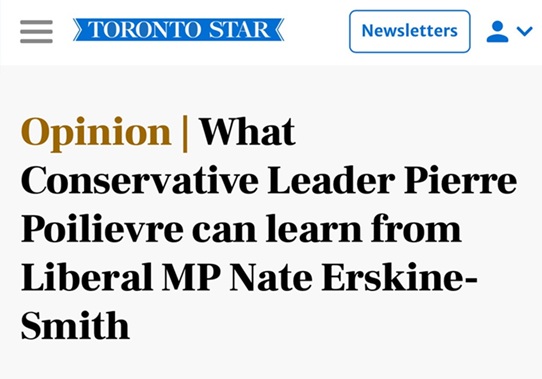
Overwhelmingly, people locally want someone who’s going to stand up and speak their mind, show principles and a sense of honesty and integrity. And if you’re a strong leader who cares about ideas, you’ll only get better ideas and policies when you welcome that kind of challenge function.
And yes, some MPs and pundits will maintain a different view, still insisting that message discipline is everything and any disagreement should be behind closed doors.
Unsurprisingly, my view is different. As I’ve written before, so long as that disagreement is respectful, reasonable, and focused on ideas there is no reason to limit it to a private conversation with a minister or the confines of our caucus walls. As Liberal MPs, our responsibility is not only to raise issues forcefully in caucus, but to participate in and help shape a broader public debate.
Now, this may all seem like doubling down on a particular view of the role of an MP, what professor Alex Marland (in his recent book) describes as “a form of principled dissent that is increasingly rare in Canadian politics.”
But while I’m not going to change how I see the role of an MP, that doesn’t mean I always get every call right in that role. In reflecting on the last ten years, my least effective moments have been when I reacted with personal frustration and forgotten that central premise: that our disagreement should be focused on ideas.
Honesty and authenticity remain essential and we can’t shy away from sharing ideas simply because they might be taken out of context by bad faith political attacks. But we can avoid making it personal when our politics should be about ideas.
-
Budget 2025, upcoming events, and more
It’s been a wild week in Ottawa with the release of Budget 2025 and chaos in the Conservative ranks. Here’s a rundown with what I see as the good, the bad, and the ugly in Budget 2025. In short, it meets the moment in part, on questions of sovereignty and spurring economic growth. At the…
Nate Erskine-SmithIt’s been a wild week in Ottawa with the release of Budget 2025 and chaos in the Conservative ranks.
Here’s a rundown with what I see as the good, the bad, and the ugly in Budget 2025. In short, it meets the moment in part, on questions of sovereignty and spurring economic growth. At the same time, it fails to live up to its promise of generational investments.
You can read the full text of my budget response further below.
Upcoming events
First, I want to make sure you’re aware of a few upcoming events in our east end:
Remembrance Day services: 11 am at the Kew Gardens cenotaph and at the East York Civic Centre, 1 pm at Branch 345 on Peard, and 2 pm at the Naval Club.
Beaches Santa Clause Parade: Sunday November 16 at 1 pm, starting at Kingston and Victoria Park. Thanks to Centre 55 for making it happen.
Uncommons Live with Tanya Talaga, award-winning author and journalist: Wednesday November 19 at 7 pm, at Beach United on Wineva. RSVP here.
Recent Uncommons episodes
Having passed legislation to ban the captivity of whales and dolphins, there remains the important question of what will happen to the animals still at Marineland. In this episode, I speak to a former Marineland trainer turned Whistleblower. And there are also other ideas among those who care about what should come next.
Catherine McKenna joined us for a live event last month to talk about her new book Run Like a Girl, climate (in)action, and the challenge of encouraging good people to join politics when there can be such a nastiness to it.
With a greater emphasis on public safety and border enforcement, we can’t forget about civil liberties and privacy rights. Kate Robertson is an expert at The Citizen Lab at U of T and Adam Sadinsky is with the Canadian Association of Refugee Lawyers.
There’s a broad need for stronger digital governance to better address privacy, competition, and online harms. Taylor Owen is an expert at McGill and founding director of the Center for Media, Technology and Democracy.
If you have ideas for future guests or topics, let me know here: [email protected]
Budget 2025: The Good, the Bad, and the Ugly
I’ve seen the budget described as investment-focused, as austerity, as reckless. Can it be all of those things at once? I won’t go through all 493 pages, I will spare you from that, but here’s a rundown of what I see as the good, the bad, and the ugly from Budget 2025.
Let’s start with the Good.
In the face of threats, the government is rightly prioritizing actions to secure our sovereignty. That includes support for businesses and workers affected by tariffs, a Buy Canada procurement policy, significant new infrastructure spending, and a huge commitment to the Canadian Forces.
There are also smart forward-looking ideas, like the sovereign fund for critical minerals, taking a lesson from Norway. And there are new dollars for innovation and to attract talent and research from the US, whose administration seems intent to run intelligence out of its country.
There are also useful actions to respond to rising youth unemployment, to create a Youth Climate Corps, to support PSWs, to protect the Canada Disability Benefit from taxation, and more.
Lots to like in many ways, and more generally, I welcome the focus on productivity, both to drive economic growth in the private sector and to get the most out of public services. Although, yes, care is required to ensure those efforts don’t go sideways.
Now to the Bad, or more fairly, where expectations were set at a level that we failed to meet, including on the question of generational investments.
First, stalled climate action. I don’t want to be too dismissive here, as the Canadian Climate Institute rightly highlighted the importance of a strengthened industrial carbon price. But apart from that promise, there was nothing new. Yes, we’re moving forward with strong methane rules and clean investment tax credits, and these are key pieces. But we’re also cutting tree planting, moving away from an emissions cap, winding down Greener Homes, and the budget offers no new money for climate action.
On housing, we’ve got the beginnings of Build Canada Homes, a tax cut for new homebuyers, and some dollars for housing enabling infrastructure that are unlikely to move the needle on development charges as much as we’d like. It falls short of the specific promises in our platform, and it unfortunately falls well short of the war-time effort that many of us thought we’d deliver.
The fiscal frame of “spend less to invest more” is actually one that I like. Operational books generally in balance, and capital deficit-spending more easily justified. But the budget adds $140 billion in new spending over 5 years – $90 billion net after savings – and only 36% of the net new spending is capital.
Related, there’s a lot of deficit-financing here to cover non-capital new spending. Honouring our initial 2% commitment to NATO made sense and a middle class tax cut was a platform promise, but these are far and away the two largest financial commitments, they are non-capital, and they should be paid for. And much needed OAS reform – the largest non-capital growing expenditure – still isn’t part of the conversation.
Now, the Ugly, and there isn’t a lot that falls in this category thankfully.
First, we see the budget commit to a new inefficient fossil fuel subsidy for LNG facilities. If there’s a business case for LNG, there’s a business case. We don’t need more public dollars chasing fossil fuels.
Worse, we see major cuts – over 2.5 billion over 4 years – to International Development Assistance. Real Keir Starmer energy that unfortunately caters to a prevailing albeit short-sighted current view among wealthy donor countries. A Pearsonian budget this is not.
Conclusion:
I know these aren’t easy times, and a budget process involves tough choices.
It’s also only a first budget – it can’t be expected to solve all problems. And the devil will be in the details of implementation in many cases – from infrastructure and housing, to innovation spending, to the industrial carbon price, to finding efficiencies in government in a manner that is fair and effective.
Overall, the budget meets the moment in part – on questions of sovereignty and with a focus on spurring economic growth at home. And it’s certainly not a budget that should throw us into an election at such an uncertain time.
But fairly, it does not live up to its promise of generational investments.
I joked with colleagues that it’s a pretty good Progressive Conservative budget. A joke! But hey, some conservatives agree.
-
“Pay Up Or We'll Kill The Whales": Inside Marineland's Collapse
Phil Demers is a former Marineland trainer turned whistleblower, known for his campaign against the company.
Nate Erskine-SmithPhil Demers is a former Marineland trainer turned whistleblower, known for his campaign against the company.
Phil Demers joins me outside the gates of Marineland for this episode- a return to a conversation we began seven years ago at the Fox Theatre.
Back then, we were fighting to pass Bill S-203 to end whale captivity in Canada. The law passed in 2019.
Now, the fight is to save the remaining 30 beluga whales and 500 other animals who remain trapped inside as the park has ceased to exist. At one point, recently, Marineland even threatened to euthanize the whales if governments didn’t provide emergency financial support.
Phil “The Walrus Whisperer” Demers was a trainer at Marineland turned whistleblower. He spent over a decade fighting Marineland in court after leaving his job there in 2012. After 13 years of legal battles and public advocacy, Marineland is finally on its last legs. But the fight to save the remaining animals isn’t over.
We discussed what happens next, short-term and long-term solutions, and why governments should lead on this instead of playing only a reactive role.
Chapters:
0:00 Standing Outside Marineland
6:21 Why China Might Actually Be Better
10:04 The Sanctuary Myth & Rescue Reality
14:08 30 Dead Whales
18:13 500 Forgotten Animals
19:30 13 Years of Legal Hell
24:37 Conclusion: The Divorce Analogy
Read further:
The Walrus and the Whistleblower – Documentary (CBC Gem) https://www.cbc.ca/documentarychannel/docs/the-walrus-and-the-whistleblower
7 years ago with Phil:
Transcript:
[00:00:00] Nate Erskine-Smith: All right, well, welcome to Uncommons. It’s an interesting episode because I’m joined by Phil Demers, who actually joined me at the Fox Theater many years ago, four years ago before we started the podcast actually. And it was just a, a local town hall event. We showed Blackfish. Right. And you were there to talk about your experience as a whistleblower at this horrible place behind us.
[00:00:19] Uh, it is interesting how far we’ve come, but also that the issue is so acute still. Uh, at the time we were talking about a bill that had to be passed. To end this kind of production and make sure we were protecting institutions in captivity. And you were adamant we had to get this bill passed. Hmm. Well we got the bill passed.
[00:00:37] Yeah. And yet we’ve got marineland, uh, beside us now, and it was grandfathered through in a way. And now we’ve got 30 beluga whales. We’ve got 500 other animals that are, that are in here. Mm-hmm. And all of which, all, all of whom need to be saved in, in, in one way or another. And, uh, it didn’t [00:01:00] have to come to this, really did it.
[00:01:02] Phil Demers: Well, we’ve, what, what has glossed over in much of, of your story is we’ve got a unwilling marine land in all of that. Yes. To evolve in any way, shape or form to be a, financially viable, uh, you know, for the security of their own future. Uh, but b, to adhere to any of the laws that we essentially passed, both provincially and, uh, and federally, although we did ban the breeding of the whales. Yep. Had we not banned the breeding of the whales. So, so currently there’s 30 belugas remaining. There’s four dolphins. Uh, we got two sea lions and a, and a host of, uh, land animals there. Had we not banned the breeding of belugas in 2019?
[00:01:41] Nate Erskine-Smith: Yep.
[00:01:42] Phil Demers: And albeit, the pregnant belugas of 2019 were grandfathered in.
[00:01:47] So there were some whale birth births there. On average, Marineland had five to seven belugas born per year. A couple would die. But there’s, you know, it’s conceivable to say that whereas [00:02:00] we have 30 right now in there, we would have had an excess of 50. Right. They would’ve kept probably 60.
[00:02:05] Nate Erskine-Smith: Yes, of course they would’ve kept the business model broke down with that law.
[00:02:08] But if they would’ve kept going otherwise, I mean, they’re, they were the bad actors. It’s the, it just wants to keep it active
[00:02:12] Phil Demers: At this point. It’s the only, it’s the only part of the law that they’ve, ad they’ve adhered to outside of importing, of course, which, which, uh, we ban. So it’s, it’s beyond their control, but.
[00:02:21] Um, you know, the breeding, they, they stopped, but had they not, we’d be talking about 50 to 60 whales in those tanks. It, it was, uh, you know, that’s something to really hang our hat on. That was a huge, uh, and super progressive, uh, lawsuit. But it does interestingly, take us to this place now where marine land is, you know, we essentially bankrupt.
[00:02:39] I, but we should stress owns a lot of land sitting on 700 acres of prime land meant to fuel or feed the, uh, the whole family trust. That’s, those are the heirs to it. You know, the operation is essentially sucking the money out of that. And so they’re looking for the, be it most lucrative or least expensive [00:03:00] way to get outta this thing.
[00:03:01] The sale to China was to be a profitable one. Uh, should be stressed that here in North America, none of the facilities wanna do business with marine land, right? A few years ago, five belugas were sent to Mystic Aquarium, three of which died within weeks and months. Uh, all having to do with, uh, preexisting conditions from Marineland.
[00:03:20] Nate Erskine-Smith: So, so pause, pause for a moment. ‘cause I think for those who are listening, they may not know you’ve got 30 belugas here. And there was, uh, a deal that Marine Land wanted a broker, at least with a facility in China. Ocean Kingdom time, long Ocean Kingdom. The decision of the federal minister was to say no animal welfare first.
[00:03:41] Uh, the primary purpose here is entertainment and, and we’re not convinced that they’re gonna be putting animal welfare first. Akin to the concern here, right? And, and why we don’t want this to contain to exist. But then the knock on question why is so acute right now is okay, but then what? Because marine land comes out as proper monsters. They say, well, if we don’t get emergency funding, we’re gonna, we’re gonna euthanize these whales,
[00:04:05] Phil Demers: which is a familiar theme with Marineland. In all of my years of dealing with them, it was always do this or else. Uh, again, I I, this morning alone, I watched a, a YouTube video. It was pretty.
[00:04:14] Pretty thorough history of marine land and in it is always the familiar threat of, well, if you don’t do this, I’m gonna, and it includes ship the park to the, to the US that includes, you know, a whole host of things. But that’s all, that’s marine land’s bluster when it, they don’t get their way right. But that said, the, the spirit of the law was to give, uh, to give final say to the minister so that they can ultimately consider the interests of the animals in it, which is a level of personhood, which is not.
[00:04:39] Which is atypical of most laws, especially of animals.
[00:04:40] Nate Erskine-Smith: Of, yeah. Yeah. An incredibly important step. Yeah.
[00:04:43] Phil Demers: Really, really, uh, progressive, you know, the spirit is to end captivity and, you know, and if you can stamp that out here, the, the idea is that it, it’s, uh, it’ll evolve to the rest of the world. And to be fair, uh, France adopted a very similar law recently passed, [00:05:00] uh, as well as, uh, new South Wales.
[00:05:02] The province in Australia adopted a law. It’s actually picking up around the world. So, so it’s, you know. I always stress when we, we look at, hey, we wanna end captivity, I always stress that’s a hundred year, that’s a hundred year fight. If all goes extremely well, you know, you’ve got burgeoning business in China, some in Russia, right?
[00:05:20] And we’re still ending sort of ours here, sort of choking that off here and that’s still expanding there. So, you know, we’ve, we’ve started something that’s gonna continue elsewhere, but you know, it’s gotta end here. It’s gotta end here first and ending.
[00:05:33] Nate Erskine-Smith: You can put a law on the books and, okay, so. Uh, on a going forward basis, you, you might avoid problems and, and avoid cruelty, but you still have 30 belugas here.
[00:05:44] And then the question becomes, well, what happens next? And, and I don’t wanna pretend that it’s just a marineland problem because you were just, uh, commenting on the fact that in Miami you got seaquarium that’s now shut down, that this is going to happen in other places too. Well of Mexico just banned it.
[00:05:59] Phil Demers: [00:06:00] And now all of their animals, now captive and legally captive can no longer perform in shows, can no longer do the swim with programs, et cetera, et cetera. So what happens is it becomes unviable to the owners. They lose their incentive, their incentive to have and use these animals. So what becomes well, unfortunately, in, in, in my estimation of what is available to us.
[00:06:20] Nate Erskine-Smith: Yeah.
[00:06:21] Phil Demers: You know, I’d always had hope that the much of these animals would go to the us, but it’s not gonna happen by way of a broker deal because again, none of ‘em wanna touch marine land for obvious reasons. Again, I, I mentioned the five whales that died at, uh, mystic.
[00:06:33] Nate Erskine-Smith: Yep.
[00:06:34] Phil Demers: They also know of the bad PR.
[00:06:36] Marine land’s been getting here for the decades. I mean, it’s been global news, you can’t ignore it. So SeaWorld also had to sue Marine Land a number of years ago to get an orca back. So SeaWorld doesn’t wanna touch marine land, so I don’t think. Anyone in the US wants to associate with buying animals off marine land or brokering any type of deal affiliations, et cetera, et cetera.
[00:06:54] But you know, I’d had this hope that this government, the provincial [00:07:00] Animal welfare society, especially with their policing powers and their ability to seize animals. You know, you have, you have essentially an opportunity to seize these animals and send them to these places, whereas those places might be receiving of them if they’re by way of a rescue versus of, of a broker deal.
[00:07:15] But again, this is me talking, theorizing, trying to figure this thing out.
[00:07:19] Nate Erskine-Smith: But let’s imagine that so, so the federal government. Has done its part in passing the law. I, I think the federal government could play a strong convening role here. And, and we’re starting to, I mean, in the wake of the minister turning down those permits, uh, to, uh, ocean Kingdom in China, I mean, uh, there is a role for the federal government to show some leadership here, but the actual law, the power that you’re talking about, the seizure power that exists, provincially, provincially, and you got Doug Ford over here talking about caring about dogs and okay.
[00:07:46] I, I like that. Okay. Yeah. Let’s, let’s have concern for, for all animals. Uh, but in this particular case, as soon as Marineland says, well, without emergency funding, we’ll euthanize them. They should be coming in here, seizing and using their authority. And, [00:08:00] and, and by the way, I mean even as part of, uh. Uh, I was reading, uh, as part of the settlement back in 2017 and driving the lawsuit.
[00:08:07] I mean, they agreed to monitoring. I mean, like, what are we even talking about here? Have animal welfare experts, animal science experts. Well, they’re in there. They’re in there. And why, and why can’t, and then why can’t Doug Ford sees these and say, now we can broker a deal with the animal welfare top of mind instead of marineland trying to extract top dollar.
[00:08:25] Phil Demers: So in the think tank, that’s become, since all of this and the Yeah. You know, sort of the, where does this go? I do have to say with limited options, China might be atop the very best options. And let me explain why if those animals were in a neutral place right now. Just let’s just, let’s just do this as like a, a sort of a thought, uh, uh, experiment if this animals were in a neutral space right now and yet to elect where they’re going.
[00:08:49] Yeah. Outside of the laws themselves, which is, you know, for the most part, it doesn’t exist in China. That I, that I know, I don’t wanna be quoted, but I don’t know what the animal, uh, oversight and, [00:09:00] and, and laws are like over here. But we know what they are here. Yeah. And we know that they exist here. But that said, they’re not really do serving so, so much.
[00:09:07] Uh, these days, if there was a choice between the facilities, it’d be hands down, you’d be sending them to, to China. It wouldn’t even be a question. There wouldn’t even be a question. These are brand new facilities that massive I had. A team member was there two weeks ago, a a, a former, uh, friend of mine that worked at marineland Works there.
[00:09:24] These are brand new massive, expansive facilities, the conditions of which are good and in fact maybe even be said to be great in the realm of captive facilities. I don’t want to be a defender of any facility. I don’t wanna say, Hey, that’s a good one, but what, on the scale of, you wouldn’t consider this for a moment, but because they’re in there, it becomes a little bit more complicated because it’s a question of, of removing them, but.
[00:09:48] Because of the limited space of where those animals have and being against the clock, they’re gonna have to go somewhere. And, uh, again, I stress the us I ideally, first and foremost, if it doesn’t work out [00:10:00] there, or if, you know, obviously they don’t have the space for 30, we know this already, some are gonna have to go to China
[00:10:04] Nate Erskine-Smith: So let, let’s walk, let’s, I, let’s take some time to walk, walk through those options. Because again, some people might say, well, why not return them to the wild? We’ve seen the consequences of that in, in, in some ways. You, uh, in, uh, there was a return to, uh, facility in, in, in Iceland at one point, I think in.
[00:10:24] So, well, that’s not, that’s not gonna work. And so there, there are just knock on challenges to, to that option.
[00:10:28] Phil Demers: There is no such thing as a perfect scenario. Also, that needs to be stressed because I think we’re, we’re, and we have been wasting a lot of time and thought on what would be perfect. Right? And it doesn’t exist.
[00:10:38] We have to scale that. Our expectations back to what is. And, and also stress that these animals are not very healthy. Now, I’m not gonna call them sick. Do we know? Do, is it Well on a, on a scale of the, they all, they’re all unwell by virtue of the conditions that have been here.
[00:10:58] Nate Erskine-Smith: But do, uh, is there that [00:11:00] openness with, uh, say.
[00:11:02] Uh, nonprofit or, or government experts and, and animal scientists who have access into properly not a chance.
[00:11:09] Phil Demers: And, and for that matter, anything that you would’ve access to look at would be changed,
[00:11:12] Nate Erskine-Smith: right?
[00:11:13] Phil Demers: So, so anyone that has a pen and, and putting it to paper has an interest in some people not knowing everything that’s going on.
[00:11:20] Nate Erskine-Smith: So Wildes out and then you’ve got, uh, wild is out and there have been proposals. For animal sanctuaries, there’s one in Nova Scotia that, that is, that is closest to realization. No. Uh, having spoke well, having spoken to the, the folks there, they said, well, the earliest is really next fall. And that’s an optimistic timeline.
[00:11:38] And, uh, and then you’re, they’re talking about a max of taking 10 of the whales, which today, in the environment that we exist, uh, doesn’t seem like the most plausible option when you want to protect these animals and, and put animal welfare in their animal interest first. Today. So, uh, the answer does, you know, first it’s just who’s the decision maker?
[00:11:59] And it can’t be marine land that is deciding what the deal on the table should be.
[00:12:03] Phil Demers: Well, clearly they’re not, they don’t make the decisions in the best, the best interest of the Yeah, exactly. Just to stress the point of the, of the whale sanctuary in Nova Scotia. I wish it more than anyone to be an operational place, but it’s not.
[00:12:13] I’ve gone, it can’t be, it’s not going to be. Its decades and hundreds of millions. And who’s foot in the bill? This is. A theory at best, and we got to move beyond theories or else what happens is people start hanging their hats out. People start talking, talking, talking. But the specific needs of those animals, and that’s outside of a perfect world, if we’re gonna have a sanctuary for animals, that has to be tried.
[00:12:36] In the best cases, not in one of duress and, and emergency, et cetera. It’s, this is an experiment for the most part, but those animals need to get a access. So we’re talking about a, uh, this monster sanctuary, but did they, in all of that, go through the what is required to actually care for these animals?
[00:12:53] You need a, a rising floor of a tank to be able to access sick animals so that you can give them, uh, medication, et cetera. You gotta be able to [00:13:00] access the animals, but an animal’s sick in the middle of your sanctuary. How are you gonna get them? And get them on a, on back to the shoreline, back into a tank where they can be monitored and then, you know, be given drugs and et cetera treated.
[00:13:12] And you’ve got the, the challenges that these animals already face is just outside of the scope of what an experiments at this point can offer. Right? These animals need facilities with people that know where to inject The animals know where to draw blood, know, you know, they got the book on the meds and they got access to those animals because that’s essentially what they need.
[00:13:32] When we’re talking about what the. What’s happening here? It’s essentially a rescue and it’s, it’s how it needs to be framed. It’s how I’ve always said it. And again, I I’m, I’m sounding like a broken record because I’ve been saying this for a decade, and if you read it, it’s, it, I don’t think I’ve done a single interview in the last decade where I said, if we don’t get those animals out, they’re gonna die.
[00:13:50] And, and, you know, it’s easy to say, well, of course they’re all going to die if they don’t move. But you know, if you watch. At the rate that I was saying it and the rate that the animal [00:14:00] started to die, we’re talking about a scale that’s grading up and speeding up and accelerating. So 30 animals have died there, essentially.
[00:14:08] I, I know it’s in the records as, as 2020 whales, but you know, if you add the three that died at Mystic as being marineland whales, right. If you add the, uh, while we know that in the, in 2019 there’s an affidavit that Marineland sworn of having 58 beluga whales. But we know that they would’ve pregnant ones.
[00:14:27] So five to seven more born there. Deduct those numbers. ‘cause they’re, they’re no longer in that inventory. Um, you’ve got 30 whales that have died essentially since about 2018. More than 50 since I quit, which will have been 60 or more if we hadn’t have passed the, the breeding bin. Nothing here is new.
[00:14:55] Marine land’s, bluster, et cetera, et cetera. You’re finally hearing their actual voice. You’re not seeing [00:15:00] the jingle on tv. You’re not seeing them talking about their, their animal welfare record and, and boasting it as the best in the world. You are seeing the, the people here have seen the marine land, the, the real marine land for the first time.
[00:15:09] Yeah.
[00:15:09] Nate Erskine-Smith: Big difference between everybody loves marine land and we’re gonna kill the whales if you don’t gonna sip on. Right. And this is a, this is a theme I’ve known for far too long because, you know, they don’t like me. But, uh, so just to close the, close this, uh, what’s on the table? It could be on the table.
[00:15:24] So. You’ve got, uh, sanctuaries talked about promising in the longer term, potentially
[00:15:30] Phil Demers: Well, if, and when that exists, the belugas hopefully are alive no matter where they are in the world to one day be received there.
[00:15:36] Nate Erskine-Smith: Right, right, right.
[00:15:38] Phil Demers: There’s so there if they’re alive, which we have to stress.
[00:15:39] Nate Erskine-Smith: And so, but in the immediate term, uh, you’re looking at, in an ideal world, when it’s not an ideal world, uh, you’ve got the premier acting, you got the provincial government that would seize. Control in order to make decisions in the best interest of the animals, you’ve got a situation where then you would survey what’s available across North America and [00:16:00] and elsewhere and say, we’re gonna proactively reach out and try to place these animals, putting animal welfare interests first.
[00:16:07] Phil Demers: And if I was negotiating those moves, I would say any re, any facility that receives these animals. Have to adhere to the spirit of the 2019 law. Right. Which is, and I think North America would, would be glad to adhere to that. They already generally do. I don’t think they’re breeding belugas. Uh, you know, most of these places have their own, despite it not being law, they’re sort of in-house no longer breeding.
[00:16:27] Definitely orcas that I know of, hopefully dolphins one day, but we’re, we’re not there yet. Uh, but that, yes, so with the caveat that, hey, if we can follow this, you know, it should be noted that. The spirit of of S two S 2 0 3, which is the law that passed, was that we’re, we’re gonna eradicate captivity in Canada.
[00:16:44] Sort of the idea was, you know, we’re gonna end this situations of captivity. And well, with the idea of that globally, this build had this, this effect. But that said, these animals who are already here, sadly, and with, with zero to minus zero option of ever being returned [00:17:00] to the wild, and I hate to be this voice.
[00:17:04] But if they go elsewhere, it may very well spare some live ones from being captured. And that is in the spirit of the law. So there is some salvation in this ending in Canada. The animals moving on to better places. Yep. And no more whales ever returning. And that practice being said and done, and we wash our hands of it.
[00:17:24] And that’s the biggest win that can be done. The noise of our bullhorns out here. Follow them to the next place. They’ll hear us out there. The fight continues where they go. That’s, that’s the reality. We got a hundred year problem ahead of us if everything goes well.
[00:17:43] Nate Erskine-Smith: And let’s talk about the other animals.
[00:17:45] I mean, you are known as the walrus whisperer. You didn’t start fighting. Just for the whales. I mean, you were fighting for the walrus smooth. She, and there are an estimated, what, 500 other [00:18:00] animals? It’s a lot of deer in there. Yeah. And, uh, and so is that also part of the picture here? I mean all obviously the public focus has overwhelmingly being on the whales, but, uh, what do we do with the other animals?
[00:18:13] Phil Demers: Well, that I know of, the Toronto Zoo expressed some interest. They were visiting the facility in early October. Those animals are likely destined for, uh, I mean, ideally, some sanctuaries that we know do exist. They, there are some, yeah. Um, the bison are already gone. No one seems to really know where there, there’s theories, but they’re gone.
[00:18:37] Uh, the bear, they that they’re gonna have a tough time because bears are, are solitary animals. They shouldn’t be confined to a tight space anyways. It’s already really, uh, antisocial and dangerous for them. It’s like a really unnatural environment. And so the coat is sort of stunted and no place is looking for a bunch of bears.
[00:18:53] So, you know, I’m, I won’t be surprised if a lot of them get euthanized very quietly, uh, and, you [00:19:00] know, the deer, 500 deer or so, what are you gonna do with that? So, I, I don’t know. Again, I, I, I leave this to, you know, I, I’m, you know, I’ve had my sort of, I, I got a decade plus of fighting against this place.
[00:19:14] That’s the extent of my knowledge of animal rights. And a lot of people come to me and say, Hey, this, this, and that. I’m just like, uh, talk to an organization that knows this stuff.
[00:19:23] Nate Erskine-Smith: Right. So they, I mean, the last time we spoke, uh, where we were, we had an audience in front of us.
[00:19:30] Yep. Uh, that’s, that, that you were still Yeah. Yeah. You were still deep in litigation where they were taking you on and trying to silence you. Mm-hmm. Uh, I mean, it’s interesting, you know, you’ve come to animal rights, but also, uh, you’ve. Really been, I think, uh, uh, you’ve, you’ve shown what it is to be a whistleblower in a, in a, in a publicized important way.
[00:19:53] And the, and the importance of whistle blowing protections despite the fact that they came after you with everything they got. And, uh, where [00:20:00] is all of that at now? I mean, you’ve, uh, uh, before we started recording, you’re talking about smooshy ended up where, so we
[00:20:07] Phil Demers: essentially, you know, so they sued me in 2000, early 2013 for plotting to steal smooshy the walrus.
[00:20:12] Yep. You terrible verse you and I could have done it, but I didn’t. And it had nothing to do with Marine le, but if anyone could have done it, but I wasn’t going to, you’d have to be crazy. And much as they tried to make me out to be crazy, uh, you know, I, there’s some percentage of crazy, but it’s not, not to the scope of what they had described in this lawsuit.
[00:20:31] So, you know, it was baseless. It, it did inspire antis, SLAPP legislation, uh, provincially, which was great. It didn’t help me, but it’s, you know, it, it’s there for the future. It’s important.
[00:20:40] Nate Erskine-Smith: Yeah.
[00:20:41] Phil Demers: And I also stress when you, when you say, you know, you did, you, you were a whistleblower and you know, we, we, we passed a, a host of different sort of whistleblower protection laws and everything.
[00:20:49] I, this wasn’t an animal rights issue. It, it, this was an animal rights issue when I left. It wasn’t animal rights. It was a, here’s what I’ve experienced and if something [00:21:00] doesn’t happen to this, this, this, these animals will, you know, their suffering will increase. Tell you, I know me suddenly being sued.
[00:21:07] Like these were, these were my friends, these animals and, and the employees. This is like, these were, you know, you’re gonna see your neighbor’s dog like that and you walk ‘em every day. You’re gonna have some concerns. Like, so this was that for me. It spills over into an animal rights realm, of course, because animal rights, people who had, you know, to their credit, been fighting this forever, suddenly, you know, I, I show up, but you know, to be fair, I’m not really an animal rights guy.
[00:21:31] She was your friend, smooshy. Yeah, of course. Right. That’s of course. But I’m just, when it comes, those you love mistreated when it comes to the history of, and what is. The box of animal rights activists, which I get very often. It’s like, no man, it’s just, it’s not, that’s not really what this was for me.
[00:21:49] What this was, was, let’s say, professional asshole versus semi-professional asshole. And it was a clash of all crazy proportions if you weren’t witness to it. I, I could only [00:22:00] imagine how much fun it was on the sidelines. I mean, I, I, I, I like to do it up for the people, put on a show, and we did. Uh, but that’s what this was, this was every corner.
[00:22:08] This was a fight. Tooth and nail in every aspect and element of every which way of my life outside of that, of the animals. It was a, it started as an animal thing and it’s taken on an entire other, uh, entire, entire other, uh, uh, level.
[00:22:24] Nate Erskine-Smith: But, but with that said and taken over your life, I mean, uh, well, the litigation and just the, I mean, all of that takes an incredible amount of toll and time
[00:22:33] Phil Demers: I would not have imagined when it happened that.
[00:22:36] That this was going to be like the most forever decision. I, I’ll be honest, and this is ambitious and in retrospect, super naive of me, but armed with the truth at the time, I thought in my mind, this is gonna take six months to resolve the, again, my objective was not, let’s shut marine land down six months.
[00:22:53] Well, what did I know about litigation, about anything? I just thought, well, listen, if the people know, well, not even the people. I thought if the, [00:23:00] if the authorities knew the, you know, if they knew, and here they were here, it was, they knew. And that was like the beginning of my journey. And here I am 13 years later and it all wholly and entirely reshaped into a, a pretty efficient marineland busting machine.
[00:23:19] Like it’s, it’s been a pleasure. But, uh, but yeah, there’s an element of almost, it’s a weird one and, but I, I almost chalk it up to what retired NHL players might. I feel like when they, when they’re so engaged in something that, that, that requires so much energy and, you know, like, and, and levels of execution and like, you know, you really gotta psych yourself up for some of the shit I’ve been through now I’m trying to take a breath from it all.
[00:23:48] Then we got this thing going on still. You’re like, ay, ay. So no, it turned into, i, I guess what will be a decade long, uh, life identifier. It’s become. [00:24:00] You know, I’m, I’m kind of married to this place now.
[00:24:02] Nate Erskine-Smith: Right, exactly. And, and, and you live through personal challenges and then coming after you legally and then all of that.
[00:24:11] But you, you, I mean, you, we stand outside this place today and it’s, you’re gonna out survive it. You know? This is on his last legs. And it’s, uh, in a, in large measure the law we passed in large measure the public outcry and large measure because you were able to shine a light on it and, and called attention is something that was wrong.
[00:24:32] Phil Demers: It kind of looks like a divorce and now we want the kids
[00:24:37] hard to, hard to find a home for the kids. That’s the problem. Well. But here we are. Uh, but again, exactly, I, I, I do stress. I think that all of this will be revisited by the feds because there is gonna have to be some extra consideration give to the immediate conditions. Yes. As just this, the extent of, of how awful all of this is.
[00:24:54] Should other things be considered first? Yes, I think so too. I don’t think marine land should stand on, uh. [00:25:00] Hey, do what we say or, or give us money and this and that
[00:25:03] Nate Erskine-Smith: No. They’ve, they’ve found their way to profit. It’s a, they should care for the animals.
[00:25:07] Phil Demers: It’s a, it’s a breath of fresh air to not to see nobody caving because, uh, Marineland has known that for too long.
[00:25:12] Yeah. Uh, but, you know, so there, there should be a, a very diligent work done as into what can be done for these animals. But, you know, given the fact that we are super limited, I think there’s gonna have to be some reconsideration. To the Chinese facilities. It just is. It would be great if they came with the caveat of don’t breed them and don’t do this.
[00:25:32] Maybe that could be negotiated. I don’t know.
[00:25:35] Nate Erskine-Smith: But I think, uh, and I think it’s useful to close here. I mean, in the end, in the same way that, uh, you’ve got individuals including yourself who have shown leadership. I mean, at this moment in time, we need governments not to react, not to say, well, it’s our job to review a permit, or it’s our job to review.
[00:25:51] If there’s a complaint or there’s an investigation to say, no, no, no. We are gonna proactively find a home for these animals. We’re gonna proactively pull the stakeholders together, [00:26:00] together, pull the organizations together across North America and elsewhere. Say it’s not a perfect world. So what exists here?
[00:26:06] What what is possible, and to, and to show some leadership and, and to not just react and to try to solve the problem in a proactive way and not leave it. To these guys who are not intending to solve the problem at all and are didn’t want the law passed in the first place.
[00:26:20] Phil Demers: They’ve proven themselves as being irresponsible caretakers.
[00:26:24] It’s time for other people to have a hand in what becomes, and uh, you know, they may not like it, but they’ve set the stage for exactly that. So now other people will have a say.
[00:26:33] Nate Erskine-Smith: Appreciate it
[00:26:34] Phil Demers: Anytime
-
The sky didn't fall: On legalization and lessons learned.
Cannabis legalization has mostly been a success. But there are also lessons to learn.
Nate Erskine-SmithCannabis legalization has mostly been a success. But there are also lessons to learn.
I now enjoy a good scrum with reporters. But the first scrum I really remember was 7 years ago today, when we officially legalized cannabis.
In the end, I was both right and wrong. Right that no one would care to ask the question about cannabis use 5 years later. Wrong to suggest the 5 year timeline, because only a year or two later we’d already reached that same conclusion.
7 years later now, and it’s hard to believe we ever criminalized the substance at all.
With the benefit of that experience, though, there are a few lessons to learn.
Lesson #1: Conservatives are consistently wrong about drug policy.
Here are some choice quotes from Conservatives in the lead up to cannabis legalization:
Marilyn Gladu: “…this legislation would put marijuana in the hands of children…so little Johnny can put some in the toaster oven and smoke it up…” (no, I don’t know how Marilyn expects Johnny to smoke from a toaster oven. I do know that her poetry would make Ginsberg cringe)
Ed Fast: “I am absolutely confident that Bill C-45…would become a massive public policy failure…”
Bob Soroya: “This is just pushing it down the throats of all Canadians…” (I don’t know if we’re still talking about little Johnny)
Stephen Harper: “misguided and reckless”
Peter Kent: “It’s virtually the same as putting fentanyl on a shelf within reach of kids.” (I like Peter, but this may have been the wildest statement among wild statements)
Garnett Genuis and I even had a whole episode of Political Blind Date on the topic:
Some Conservatives, like Scott Reid, have been consistently supportive of cannabis law reform on the basis of their firm belief in individual liberty (Poilievre’s desire to make Canada the freest country in the world does not apparently apply here). But we mostly saw an evolution in political thinking on the right when past Conservative politicians started to make money in the cannabis industry, hypocrisy be damned.
Now, thankfully, the Conservative leadership has at least implicitly acknowledged they were wrong, making it plain that they don’t intend to recriminalize cannabis (yes, there are exceptions).
Lesson #2: there’s room to improve the rules as we balance economic impact with public health considerations.
Legal cannabis production and sale has made a huge dent in the illegal market since 2018. Billions of dollars that were otherwise flowing to organized crime now support Canadian entrepreneurs and workers. The sector now represents a significant annual GDP contribution (direct + indirect) of $13 billion, helping to support 200,000 jobs.
And yes, we can recognize and support these positive economic impacts at the same time as we maintain a public health approach.
From a public health perspective, that means continuing to limit commercial advertising and further advancing education, particularly about potential effects on developing brains.
From an economic standpoint, we should recognize that this is a serious and credible industry deserving of our attention and support.
That means ensuring cannabis producers aren’t forgotten in government programs, especially when it comes to exports but also those that serve the ag sector.
It means reducing unnecessary regulatory burdens. An obvious example is one we promised in the 2024 Fall Economic Statement – to move towards a national excise stamp – even more obvious now as we look to harmonize and remove trade barriers.
And it means reforming excise taxation more broadly. 7 years ago, the government imposed a $1 minimum tax on every gram, thinking perhaps that a gram = $10 on the black market. Not only did this ignore the reality of bulk pricing at the time, it now means that excise taxation alone makes it difficult for cannabis producers to survive.
With the economic opportunity here at home, and increasingly abroad, we should fix that mistake.
And, a smaller point on subject of tax reform, let’s not forget that medical cannabis is improperly subject to both excise and GST/HST taxation, which do not apply to other prescribed products by health professionals.
Lesson #3: different substances carry very different potential harms, so of course there should be different policy approaches.
In January, a Conservative MP visited my riding outside an event where I endorsed now Prime Minister Mark Carney, declaring that I’m a “radical drug advocate.” For my part, I’ve always thought prohibition was radical drug policy.
The Conservative Party even saw fit to put out a press release making the same argument. I actually appreciated it in a way, because it meant that a staffer/volunteer took the time to listen to and read a number of things I’ve said and written about drug policy over the years. Perhaps they were convinced in the end that we should treat substance use as a health issue, not a criminal justice one.
Unfortunately, the renewed “war on drugs” rhetoric isn’t just cartoonish, it also has serious potential consequences. When it has informed real policies, as it did for decades, those consequences could be measured in lost lives and liberty, squandered judicial and police resources, and exacerbated social and health challenges.
Last year, uninformed as ever, Poilievre conflated legalization efforts with opioid deaths, calling out “the Prime Minister’s disastrous legalization and liberalization of drugs.”
It’s important that we distinguish different policy approaches.
On the subject of cannabis, for example, I was clear at the time that cannabis has potential harms (mental health in youth, impaired driving, etc.), but that it is less harmful than alcohol and tobacco. And while I argued that we should treat Canadians as responsible adults when it comes to cannabis, I also argued for a public health approach that would limit commercial advertising (unlike the brazen alcohol and gambling ads we see all over the place).
We completely ignore a public health approach when it comes to alcohol, of course. Despite pouring out a bottle, widespread alcohol availability is the only priority Ford seems to have realized successfully.
More to the point, a public health approach won’t be the same for all substances, because of different effects and potential harms.
Take caffeine and and codeine, for example.
Caffeine is legal and permissively regulated with mg limits and warnings about consumption for both quantity and vulnerable groups, like kids and pregnant women. Codeine, on the other hand, is tightly regulated via medical prescription. Different substances = different regulatory models.
Or take psilocybin and heroin.
Psilocybin would likely benefit from a model closer to cannabis legalization and regulation. On the medical side, there are positive healthcare uses and the current special access program doesn’t work effectively to provide meaningful patient access. On the recreational front, we see illegal stores operate with some impunity and Canadians would benefit from quality control and a safely regulated marketplace.
Heroin, on the other hand, falls more clearly in the tightly regulated via a medical prescription model. And treatment on demand and safe/supervised access to reduce harms will collectively help to save lives.
Whether it’s an eating disorder or substance use disorder, we should aim to get people the help they need, not push them away from that very help by punishing them. In other words, we should treat substance use as a health issue, not a criminal justice one.
All of that’s to say, cannabis regulation teaches us that we can move successfully away from the failure of prohibition. It doesn’t, however, offer a useful framework for all other substances.
-
Grand bargains and running like a girl with Catherine McKenna
Nate is joined by Catherine McKenna, former Environment Minister and current chair of UN expert net zero group
Nate Erskine-SmithNate is joined by Catherine McKenna, former Environment Minister and current chair of UN expert net zero group
Catherine McKenna joined me in person for a live recording of this episode at the Naval Club of Toronto here in our east end. We discussed her new book ‘Run Like a Girl’, lessons learned from her six years in federal politics, the reality of political harassment, the tension between party loyalty and telling it like it is, and why we should be wary of “grand bargains” on climate with oil and gas companies.
Catherine served as Environment and Climate Change Minister from 2015-2019 and Infrastructure Minister from 2019-2021. She’s now the founder and CEO of Climate and Nature Solutions and chairs a UN expert group advising the Secretary General on net zero commitments.
Read further:
Run Like A Girl – Catherine McKenna (2025)
https://www.catherinemckenna.ca
Chapters:
00:00 Introduction & Run Like A Girl Book
05:32 Lessons from Politics: Hard Work & Balance
08:52 Climate Barbie & Political Harassment
15:26 Running for Office in Ottawa Centre
23:17 Being a Team Player vs. Speaking Truth
32:05 Leaving Politics
40:30 Climate Policy & the Oil & Gas “Grand Bargain”
48:24 Supporting Others in Politics
52:56 Carbon Pricing Communication Failures
59:13 Gender Balance, Feminism & Cabinet
01:04:04 Final Thoughts & Closing
Transcript:
Nate Erskine-Smith
00:02 – 00:38
Well, thank you everyone for joining. This is a live recording of the Uncommon’s podcast, and I’m lucky to be joined by Catherine McKenna, who has a very impressive CV. You will know her as the former Environment Minister. She is also the founder and CEO of Climate and Nature Solutions, a consultancy focused on all things environment and nature protection. And you may or may not know, but she’s also the chair of a UN expert group that gives advice to the Secretary General on net zero solutions. So thank you for coming to Beaches East York.
Catherine McKenna
00:38 – 00:56
It’s great to be here. Hello, everyone. And special shout out to the guy who came from, all the way from Bowmanville. That’s awesome. Anyone from Hamilton, that’s where I’m originally found. All right. Nice, we got a shout out for Hamilton. Woo-hoo.
Nate Erskine-Smith
00:57 – 01:19
So I ran down a few things you’ve accomplished over the years, but you are also the author of Run Like a Girl. I was at, you mentioned a book launch last night here in Toronto, but I attended your book launch in Ottawa. And you can all pick up a book on the way out. But who did you write this book for?
Catherine McKenna
01:21 – 02:58
So, I mean, this book has been a long time in the making. It’s probably been five years. It was a bit of a COVID project. And you’ll see, it’s good, I’ve got my prop here, my book. But you’ll see it’s not a normal kind of book. So it has a lot of images of objects and of, you know, pictures, pictures of me getting ready to go to the state visit dinner that was hosted by Obama while I’m trying to finalize the text on climate. So it’s got like random things in it, but it’s intended for a much broader audience. It’s really intended to inspire women and girls and young people. And I think that’s particularly important right now because I work on climate and I think it’s really hard. Do people here care about climate? Yes, I imagine here you care about climate. I mean, I actually think most Canadians do because they understand the wildfires and they see the smoke and people are being evacuated from communities and you can’t get insurance if you’re in a flood zone. But I do think in particular we need to bolster spirits. But also it’s a book, it’s really about how to make change. It’s not like people think it’s like a political memoir. So I think, you know, fancy people in politics will look at the end of the book to see if their name is there and maybe be disappointed if it isn’t. But it’s not really that kind of book. It’s like I was a kid from Hamilton. I didn’t want to be a politician. That wasn’t my dream when I grew up. I wanted to go to the Olympics for swimming. And spoiler alert, I did not make the Olympic team, but I went to Olympic trials.
Nate Erskine-Smith
02:59 – 02:59
You’re close.
Catherine McKenna
03:00 – 04:05
I was, well, closest, closest, but, but it wasn’t, I mean, you know, life is a journey and that wasn’t, it wasn’t sad that I didn’t make it, but I think it’s just to hopefully for people to think I can make change too. Like I didn’t come as a fully formed politician that was, you know, destined to be minister for the environment and climate change. So in particular for women and young people who are trying to figure out how to make change, I think it’s a little bit my story. I just tried to figure it out. And one day I decided the best way to make change was to go into politics and get rid of Stephen Harper. That was my goal. He was my inspiration, yes, because we needed a new government. And yeah, so I really, really, really am trying to reach a much broader audience because I think we often are politicians talking to a very narrow group of people, often very partisan. And that’s not my deal. My deal is we need everyone to be making change in their own way. And I want people who are feeling like maybe it’s a bit hard working on climate or in politics or on democracy or human rights that you too can make change.
Nate Erskine-Smith
04:06 – 05:17
And you were holding it up. I mean, it’s a bit of a scrapbook. You’ve described it. And it’s also honest. I mean, there was some media coverage of it that was sort of saying, oh, you said this about Trudeau, calling him a loofer. And there’s a certain honesty about I’ve lived in politics and I’m going to call it like it is. But what I find most interesting is not the sort of the gotcha coverage after the fact. It’s when you go to write something, you said you’re not a writer at the launch that I saw in Ottawa, but you obviously sat down and were trying to figure out what are the lessons learned. You’ve had successes, you’ve had failures, and you’re trying to impart these lessons learned. You mentioned you sort of were going down that road a little bit of what you wanted to impart to people, but you’ve had six years in politics at the upper echelon of decision-making on a really important file. I want to get to some of the failures because we’re living through some of them right now, I think. Not of your doing, of conservative doing, unfortunately. But what would you say are the lessons learned that you, you know, as you’re crystallizing the moments you’ve lived through, what are those lessons?
Catherine McKenna
05:19 – 07:12
It’s funny because the lessons I learned actually are from swimming in a way that actually you got to do the work. That, you know, you set a long-term goal and, you know, whatever that goal is, whatever you hope to make change on. And then you get up and you do the work. And then you get up the next morning and you do the work again. And sometimes things won’t go your way. But you still get up the next morning. And I think it’s important because, like, you know, look, I will talk, I’m sure, about carbon pricing. We lost the consumer carbon price. There’s a chapter. It’s called Hard Things Are Hard. I’m also, like, really into slogans. I used to be the captain of the U of T swim team. So I feel like my whole life is like a Nike ad or something. Hard things are hard. We can do it. But yeah, I mean, I think that the change is incremental. And sometimes in life, you’re going to have hard times. But the other thing I want people to take from it is that, you know, sometimes you can just go dancing with your friends, right? Or you can call up your book club. I would sometimes have hard days in politics. And I was like, oh, gosh, that was like, what? happened. So I’d send an email, it would say to my book club. So if you have book clubs, book clubs are a good thing. Even if you don’t always read the book, that would be me. But I would be SOS, come to my house. And I’d be like, all I have is like chips and wine, but I just need to hang out with regular people. And I think that’s also important. Like, you know, life is life. Like, you know, you got to do the work if you’re really trying to make change. But some days are going to be harder and sometimes you’re just trying to hang in there and I had you know I had I have three kids one of them they’re older now one of them is actually manning the the booth selling the books but you know when you’re a mom too like you know sometimes you’re going to focus on that so I don’t know I think my my lessons are I I’m too gen x to be like you’ve got to do this and I
Nate Erskine-Smith
07:12 – 07:16
learned this and I’m amazing no that’s not writing a graduation speech I’m not I’m not writing a
Catherine McKenna
07:16 – 08:43
graduation speech and I don’t know that you know the particular path I took is what anyone else is going to do I was going to I went to Indonesia to do a documentary about Komodo dragons because my roommate asked me to so that led me to go back to Indonesia which led me to work for UN peacekeeping and peacekeeping mission in East Timor but I think it’s also like take risks if you’re a young person Like, don’t, people will tell you all the time how you should do things. And I, you know, often, you know, doubted, should I do this, or I didn’t have enough confidence. And I think that’s often, women often feel like that, I’ll say. And, you know, at the end, sometimes you are right. And it’s okay if your parents don’t like exactly what you’re doing. Or, you know, people say you should stay in corporate law, which I hated. Or, you know, so I don’t know if there’s so many lessons as a bit as, you know, one, you got to do the work to, you know, listen to what you really want to do. That doesn’t mean every day you’re going to get to do what you want to do. But, you know, if you’re really passionate about working human rights, work on human rights, like figure out a way to do it and then also have some fun. Like life can feel really heavy. And I felt that during COVID. I think sometimes now after, you know, looking at, you know, social media and what Donald Trump has done or threatened to do, it can feel hard. So I think it’s also OK to to just check out and have fun.
Nate Erskine-Smith
08:44 – 08:46
I like it. Well, there aren’t lessons, but here are three important lessons.
Catherine McKenna
08:48 – 08:50
I am a politician. It’s good. Well, it’s OK.
Nate Erskine-Smith
08:50 – 09:57
You mentioned a few times really writing this book in a way to young people and specifically to young women to encourage them to to make a difference and to get involved. and yet politics, we were both drawn to politics, I think for similar reasons, and it is one of the most important ways to make a difference, and I wanna get to you. There are other ways to make a difference, of course, but there’s a bit of a tension, I think, in what you’re writing, because you’re writing this encouragement to make a difference, and politics is so important, and on the flip side, you document all sorts of different ways that politics has been truly awful, the absurdity of, I knew the ridiculous idiocy of Climate Barbie, but I didn’t actually appreciate that you had these bizarre men coming to your house to take selfies in front of your house. That’s just a next-level awfulness. And so how do you, when you’re talking to young people, to encourage them on the one hand, but also you don’t want to shield them from the awfulness, and we all want to make politics a more civil, better place, but these are problematic tensions.
Catherine McKenna
09:58 – 10:42
Yeah, I mean, look, I thought a lot about what I wanted to say about like the hate and abuse that I got, but also my staff got. I mean, they come to my office and start screaming. And of course, everything’s videotaped. So and, you know, there were incidents at my house. And so I first of all, I believe in being honest. Like, I just believe in it. I believe that people deserve the truth. But also in this case, I wasn’t looking for sympathy. I’m out of politics. I don’t need sympathy, but we need change. And so I think the only way, one of the only ways we get changed, and you know how hard it is to get policy, like online harm legislation. We still have not gotten online harm. In a way, it’s kind of unfathomable that we can’t just get it. Like, we know that online.
Nate Erskine-Smith
10:42 – 10:43
C5 happened real quick, though. Don’t worry.
Catherine McKenna
10:43 – 10:43
Okay.
Catherine McKenna
10:44 – 10:48
Well, luckily, I’m not in politics anymore. I’m not in politics anymore.
Catherine McKenna
10:48 – 11:48
I just do my thing. But I do think that by documenting this, I’m hoping that people will read it and say, well, wait a minute, that’s not OK, because that’s how we will get the support to get legislation to make sure that we hold social media platforms accountable. that’s the way that we will be able to get people to say to politicians, you cannot go and do personal attacks and then go spread them online to get to get clicks. And that we can get proper protection for politicians, which I don’t love, but actually we need that sometimes. So I think that it is important to say that I don’t want people to feel down because I have multiple purposes in the book. Like people are talking about this. And I’ve had a number of my female politician friends saying thank you for stepping up because now people are taking it more seriously because they’re like wow that was bad like climate barbie sounds kind of quaint now but climate barbie led to a whole bunch of things that led to a bunch of things that led to rcmp finally being outside my house which
Nate Erskine-Smith
11:49 – 12:05
wasn’t amazing but at least i felt safe but it’s one thing to say quaint but it normalizes a misogyny that is that is awful right yeah so it’s and it might it might not be a direct threat it might not be taking a selfie outside of your home which is an implicit threat but it is it’s normalizing an awfulness in our politics.
Catherine McKenna
12:06 – 12:10
Yeah, I mean, it is. From other politicians. It was a former minister in Harper’s Cabinet
Nate Erskine-Smith
12:10 – 12:11
who started it, right?
Catherine McKenna
12:11 – 12:21
It was, or at least amplified it. We’ll go there, like the climate Barbie. Okay, so climate Barbie is, it’s quite weird because now my kids are like, well, Barbie went to the moon.
Catherine McKenna
12:21 – 12:22
Barbie was an asteroid.
Catherine McKenna
12:23 – 14:57
Quinn is here, like, you know, Barbies are, like, you know, not that big a deal. The thing is, if you are my age, if anyone here is 50 or over, I think you’re pretty clear when someone who’s 50 or over calls you climate barbie there’s a lot going on in that and i said nothing like i was actually baptized climate barbie very early on um by a rage farming alt-right outlet they are not media and that’s what they do this is their game they go after progressives to make money actually um for clickbait but i didn’t do anything for so long um and i guess my team was lovely and i had a lot of really awesome women and they’re like just don’t do it because you’ll they’ll know that you know they can go after you um and so i’m at the un actually it’s like seven years ago i was just at the un last week yes i heard donald trump but i was there to work on climate but it was the same thing it was the end of a really long day i was going back to the hotel i was actually in the hotel lobby some crabby hotel with my team and i look at my phone i was like why is my twitter exploded what has happened and then i see the climate barbie tweet and i said to my team. I said, okay, I’m sorry. I’m just going to have to deal with this situation. And they knew, like, I’m, when I say I’m dealing with it, I’m going to deal with it. And so I, I, you know, I’m a lawyer by training. So I, you know, try, I am Irish. I’ve got the hot headed side and then I’ve got the lawyer rational side. So I was like, okay, what am I going to say? There’s going to call it out, but in a way that isn’t falling into the trap of just calling names. So I said, it’s in this book. I’m not going to get exactly right, but it was something like, would you use that kind of language with your girlfriend, wife, mother? You’re not chasing women out of politics. Your sexism is going to chase women, whatever it was. And what was so interesting about this, and this is why in this book, I do the same thing, is that it went viral. And I wasn’t trying to do this. I was trying to shame him so he would stop. And people like would stop me in the streets. And it would be, you know, conservative men, they’d be like, I’m a conservative, I’m ashamed. This is not acceptable. And I really appreciate this. This is how you stand up to bullies. And I thought, oh, this is important that we do this every once in a while, because often as a woman, you’re kind of supposed to take it because otherwise you look a bit weak. And I realized actually the power is other people saying that this is not okay. So I actually appreciate that you call it out. You will see in my book. I will just let me see if I can find it. I also, like, kind of bizarrely, a bunch of, like, men would send me Barbies with really mean notes.
Catherine McKenna
14:57 – 15:04
So they’d go to a store, buy a Barbie, then go and find the address of my constituency office or my ministerial office,
Catherine McKenna
15:05 – 15:32
and then send it with a note that they personally addressed. Like, that’s kind of weird. So anyway, the funny thing is, I guess, is it funny? I don’t know. It’s just it. There’s a Barbie. This is actually a picture of one of the Barbies that was sent. We would normally put our Barbies in the Christmas toy drive. I guess we figured might as well give it to, you know, kids that would like the Barbie. But I found one when I was cleaning up my office. And I was like, oh, I’m going to just keep that. I’m going to like, you know, just keep that. So you can…
Nate Erskine-Smith
15:32 – 15:33
No one’s sending you Barbies.
Catherine McKenna
15:33 – 15:38
I have a book of just… No one’s sending you Barbies. Glorious things that people have sent, like written notes that people have sent over the years
Nate Erskine-Smith
15:38 – 16:33
where you’re just like, this is the most bizarre thing to have received. And, you know, in 10 years in politics, the scrapbook grows. So speaking of, you mentioned Harper being an inspiration of sorts. You also have said, I’m just a regular person who wanted to make a change. And politics, you also said, I didn’t want to be a politician. I want to be an Olympian. But you also document Sheila Copps as someone you looked up to. You mentioned your dad being very political. And Pierre Elliott Trudeau was the person in politics who was a bit of an inspiration for your dad and family. And so Harper, obviously, a motivating force for me as well in the lead up to 2015. I think there’s a whole class of us in the lead up to 2015 that wanted a different kind of politics. How did you get on the ballot, though? It was you were a lawyer and you thought, no, this is this particular moment. Were people tapping on the shoulder and saying, come on, Catherine, now’s the time?
Catherine McKenna
16:37 – 18:52
Yeah, I mean, it’s kind of a funny story because women often have to be asked multiple times. The thing is, I’d already been asked before 2015. And it’s kind of funny because I saw my friend last night who’s part of the story. So when Stéphane Dion was running, I went back to Hamilton. So that’s where my parents, my dad passed away. But that’s where my parents lived. And I was walking up my street. And the head of the riding association was like, would you like to run? So the election, I think, was already called. I’m pregnant. I live in Ottawa. And so I was like, oh, maybe I should think about that. So I asked my friend. He’s like, well, I guess you won’t have to knock on doors. So that was my first time getting asked. I did not run then. But I ran a charity that did human rights, rule of law, and good governance. I’d started this charity after having lived abroad with a friend. And, I mean, it was like banging your head on a wall in the pre-Harper times. We were trying to support human rights. We were working with indigenous youth in Canada focused on reconciliation. I cared about climate change. I was like, all of these things I’m trying to do outside of the system are a complete and utter waste of time. So I thought, OK, we’ve got to get rid of the government. So that’s my theory of change now. My theory of change was create this charitable organization, and it’s just not getting the impact. So I decided I was going to run, but I was in Ottawa Centre. So I don’t know if many of you know Ottawa Centre. It’s actually where Parliament’s located, so it’s great. It’s a bike ride to work. But it was Paul Dewar, who was a really beloved NDP member of parliament. His mother had been mayor. And I really like Paul, too. But the reality is you’ve got to win, right? So you’ve got to win enough seats so you can form government. So I ran for two years. And it’s interesting because I just decided to run. I canvassed, and so maybe the woman, this will maybe resonate a little bit. So I was like, okay, I really want to run, but I kind of need permission. I don’t know why I thought I needed permission, but I did. So I went the rounds. And I like the Liberal Party, but it can be like an inside club. And I wasn’t from Ottawa Centre. And so I think people were like a bit perplexed. They’re like, we’re kind of keeping this riding for a star candidate. And I was like, okay, what the heck? Who’s a star?
Catherine McKenna
18:52 – 18:53
Like, what’s a star candidate?
Catherine McKenna
18:53 – 19:07
Is that like a male lawyer who gives a lot of money to the Liberal Party? Like, I was like, seriously, what is a star candidate? Yeah, that’s what it is. Okay. Sorry. Sorry. I don’t know. You are a male. I ran when I was 29 and had no money.
Nate Erskine-Smith
19:07 – 19:09
That was a setup. That was a setup.
Catherine McKenna
19:09 – 20:15
No, it wasn’t. Okay. Anyway, we’ll just blow by that one. You’re a little bit unusual. Okay. So we’ll take you out of that. But anyway, it’s quite funny because then I was like, and then people were like, actually, you should just get the party to go get you another riding that’s winnable. So I was like, okay, on the one hand, you need a star candidate here for this great riding that, but on the flip side, no one can win. So I was like, okay, I don’t really know. So I looked at, like, you know, I’m not a fool. I was a competitive swimmer. I want to win. So I looked at the numbers, and I realized, like, you know, if Justin Trudeau was then leader, if we did super well, we were in third place, and it was two years out. But if I worked really hard and we did super well, there was a shot at winning. So I just decided I’m going to run. And I got the chapters called The New Girls Club. And then I had men supporting me. It was fine. But I literally had a lot of women who were just like, I don’t know if you can win. This is kind of bonkers. You’re doing it. But I’m going to step up and give you some money. I’m going to go help sell nominations. And at that point, you had to sell them. And no one wanted to buy a nomination.
Catherine McKenna
20:15 – 20:20
People are like, I don’t want to be a party. I want to join a party, especially a liberal party.
Catherine McKenna
20:22 – 21:04
And so those of you who are thinking about politics, how do you win a nomination? I was trying to sell memberships and people weren’t buying them. I was like, oh gosh, every night I’m going out, I’ve got these kids and I’m going out and talking to people. And I’m spending two hours and getting one or two nominations, people signing up. So I actually realized it was my kids’ friends’ mothers whose names I didn’t know. I just knew their kids. And I think they were like, wow, we don’t really know anyone that would go into politics. But we actually think you’d be pretty good. And your kids would kind of nice. And I don’t know. I’ll just sign up. I don’t care.
Catherine McKenna
21:04 – 21:06
And so it was actually really heartening.
Catherine McKenna
21:07 – 23:15
And I will say, like, for all the bad of politics, and there is some bad for sure. And you will read about it in my book. That campaign for two years, like, we knocked on more than 100,000 doors. We had the highest voter turnout in the country. We had, I had my own rules. Like, I was like, we’re going to do this in the way that I believe in. and you know some like some of it was following the bomb a snowflake model like you know we wanted to run hard but we also engaged kids and it wasn’t like we had just like a kid area we would have kid canvases and I just felt important to me and we went to low income parts of the riding where some people said they’re not going to vote or we went to university we went to university residents they’re like they’re not going to vote actually they turned out in strong numbers and I got a ton of volunteers who, and people that knew my name, because like someone who knows someone who knows someone. So it was great. But I will say like, that’s the one thing about getting involved in politics. You may be here. I met a couple of you who said younger people who said you’d like to run. You can do it. You don’t need permission. You’re gonna have to hustle. You’re gonna have to build your team. But this isn’t an in club. And I do sometimes worry that politics feels like an in club and it shouldn’t be that like we need everyone who wants to step up and get involved in however they want to get involved to be able to do that and so that’s my lesson read that chapter hopefully you feel quite inspired and when I knocked on the last door I didn’t know if I would win or not but I knew we’d left it all on the ice and I felt great like I was like we also have another woman who has run here it’s Kelly is it Kelly who’s run a couple times you know what it’s like like you build a team. Now you were in a super hard riding. I do hope you run again. But it, it’s just this feeling of doing something that matters and bringing people together in a common cause that is bigger than yourself. And it’s about believing you can improve lives and you can tackle climate change. So that was a great I hope you read it and feel like you can do it too, if you want to run because you can, I will say you got to work hard. That is one of the most important thing doors got
Nate Erskine-Smith
23:15 – 23:36
got a knock on doors well so i want to get back to though you were emphasizing one this idea of an insider culture but at the same time the need to have a really local presence and it was people who who were on the ground in the community who who ultimately helped get you over the finish line the nomination i mean here you know sandy’s working the bar i went to high school with his kids and
Catherine McKenna
23:36 – 23:41
he signed up in the nomination you got sandy and he got us a beer and and you got claire and fred
Nate Erskine-Smith
23:41 – 24:44
here who again i went i went to high school with their kids and they signed up in the nomination probably for joining the Liberal Party for the first time. And you go down the list, and there are people who are behind you locally. And in part, I think when you get started, now you go, okay, well, I know this person in the party, I know that person in the party, I’ve lived in the party for 12, 13 years. But I was 29 when I was starting to run the nomination. No one was tapping me on the shoulder and going, like, you’re a star candidate, whatever that means, as you say. And so it does require that desire to say, no one has to ask me. I’m going to go do it and I’m going to build my own local team. But it also gets, I think, at another tension of who is your team? Because you say at one point, sometimes you need to be on the outside so you can push the inside to do more. And so you’re on the outside now and you can be probably more honest in your assessment of things and more critical. I have tried, though, at times over the 10 years to play that same role in caucus.
Catherine McKenna
24:46 – 24:49
What? Nate? I thought you were always all in on everything. Yeah, all in on everything.
Nate Erskine-Smith
24:50 – 25:32
But it does get to this idea of team. It’s like, be a team player, be a team player, be a team player. And the answer back is, well, who’s your team? And yeah, sure, of course the team is the Liberal caucus, but the team is also people in Beaches of East York, the people who are knocking doors with the nomination, people who are knocking doors in the election. And they also want accountability. They also want the party and the government to be the best version of itself. And so do you find you were when you think back at the six years that you were in. I mean, cabinet’s a different level of solidarity, obviously. But do you think it’s possible to navigate that, you know, critical accountability role inside the tent? Or do you think it’s essential as you are now to be outside to play that, you know, that that truth function?
Catherine McKenna
25:34 – 25:46
I mean, that’s a that’s a really hard question because I mean, I’m a team person. I just sound like I was captain of a swim team. But that doesn’t team. So it’s different. Like, I’ll just have to distinguish like being in cabinet.
Catherine McKenna
25:47 – 25:52
Like you do have cabinet solidarity. But in cabinet, let me tell you, like I spoke up.
Catherine McKenna
25:52 – 26:50
I like everyone didn’t didn’t always like it, but I felt like I had an obligation to just say things. And that was as much to myself as it was to anyone else. But then once you do that, you know, there is this view that then you stand with the team or else you leave cabinet. That is hard. That is hard. But it’s probably less hard than being in caucus where you feel like you might have less influence on the issues. The one time I felt this was actually when I was out, but it was hard to do. And this is when I spoke up and I said I felt it was time for Justin Trudeau to step down, like to like have a leadership race to allow someone new to come in. And it was funny because I got like all these texts like and I was out. Right. So you think not such a big deal. But I got texts from people and like saying, who do you think you are? Like, you know, we’re a liberal team. And I was like, OK, this is weird because I get team, but team doesn’t equal cult.
Nate Erskine-Smith
26:52 – 26:52
Welcome to my world.
Catherine McKenna
26:56 – 28:06
Nate and me, are we exactly the same? Probably not exactly the same, but no, no. but I think it’s true because I was like, well, wait a minute. We also owe it to, in that case, it was also like, we got to win. Are we going to just go? Is this the way it’s going? We’re just going to allow us to go down even though it’s clear that the wheels have come off the cart. And that was hard. But I thought about it, and I was just so worried about the other option. Like Pierre Paulyab, that was too much. And I was like, okay, if I can make a bit of a difference, I will take a hit. It’s fine. But I like, look, there is it is really hard to navigate that. And I mean, obviously, if it’s super chaotic and no one’s supporting things, I mean, the government will fall and you can’t get agendas through. There does have to be some leeway to say things like that is important. It’s that line and the tension. And I know you’ve you’ve felt it. And, you know, we haven’t always been on the same side of those things, probably. But that is hard. That is hard. And I don’t know that there’s any easy answer to that because you can’t always be in opposition because you can’t govern.
Catherine McKenna
28:07 – 28:09
So I would actually put that to you, Nate.
Catherine McKenna
28:10 – 28:38
No, but I think it’s an interesting question for you because, as I said, I was in cabinet, so it was a little bit easier. I mean, you literally have to vote with the government. But for you, there were times that you decided to, you know, be your own voice and not necessarily, well, not when I say not necessarily, not support, you know, the government’s position. like how did you make decisions on that like how do you decide this is the moment i’m going to do that sometimes i care but i don’t care as much or maybe i’ve done it you know a few times and i
Nate Erskine-Smith
28:38 – 31:51
should stay together like how did you how do you make that choice so i i think that uh trudeau and running for his leadership one thing that drew me to him actually he was calling for generational renewal at the time which which appealed to me but he was also talking about doing politics differently and whether that promise was entirely realized or not you know you lived around the cabinet table you you know more than me in some ways but I would say the promise of freer votes was incredibly appealing to me as the kind of politics that I that I want to see because I do think you you want that grassroots politics you want people to be it sounds trite now but that idea of being voices for the community in Ottawa not the other way around but there is a there’s a truth to that. And so how do you get there and also maintain unity? And I think they navigated that quite well when in the leadership and then it became part of our platform in 2015, he articulated this idea of, well, we’re going to have whipped votes on platform promises. Do I agree with everything in the platform? No, but I’ll bite my tongue where I disagree and I’ll certainly vote with the government. Two, on charter rights and human rights issues. And then three, and this is more fraught but on confidence matters more fraught i say because there were moments where they made certain things confidence matters that i didn’t think they should have but you know that was that was the deal and that was the deal that you know you make with constituents it’s the deal that you make with with members of the liberal party beyond that i think it’s more about how you go about disagreeing and then it’s making sure that you’ve given notice making sure that you’ve explained your reasons i i’ve i’ve uh i’ve joked i’ve been on many different whips couches but uh andy leslie i thought was the best whip in part because he would say why are you doing this and you’d run through the reasons he goes well have you have you engaged with them like do they know yeah well have they tried to convince you otherwise yeah and but here are the reasons okay well sounds like you thought about it kid get in my office and it was a there was a you could tell why he was an effective general because he he built respect as between you uh whereas you know the other approach is you have to vote with us. But that’s not the deal, and here’s why. And it’s a less effective approach from a whip. But I would say how you, you know, I’ve used the example of electoral reform. I wasn’t going and doing media saying Justin Trudeau is an awful person for breaking this promise, and, you know, he’s, this is the most cynical thing he could have possibly have done, and what a bait and switch. I wasn’t burning bridges and making this personal. I was saying, you know, he doesn’t think a referendum is a good idea. Here’s why I think there’s a better forward and here’s why I think we here’s a way of us maintaining that promise and here’s why I don’t think we should have broken the promise and you know different people in the liberal party of different views I think the way we go about disagreeing and creating space for reasonable disagreement within the party outside the party but especially within the party really matters and then sometimes you just have to say there’s an old Kurt Vonnegut line it’s we are who we pretend to be so be careful who you pretend to be and I think it’s double each room politics and so you know you want to wake up after politics and think I did the thing I was supposed to do when I was there. And sometimes that means being a good team player, and other times it means standing up and saying what you think. Okay, but back to questions for you.
Catherine McKenna
31:52 – 31:57
Do you like that one? That was pretty good. Just put Nate on the hot speed for a little bit.
Nate Erskine-Smith
31:59 – 33:01
You can ask me questions, too. Okay, so I was going to ask you why not politics, but you’ve sort of said, I’ve heard you say you felt that you were done, and you did what you came to do. But I want to push back on that a little bit, because you did a lot of things, especially around climate. First climate plan, you put carbon pricing in place, a number of measures. I mean, that gets all the attention, and we can talk about the walk back on it. But there’s stringent methane rules, there were major investments in public transit, there’s clean electricity. You run down the list of different things that we’ve worked towards in advance. And then we talk about consumer carbon pricing, but the industrial carbon piece is huge. Having said that, do you worry you left at a time when the politics were toxic, but not as toxic as they are today around climate and certainly around carbon pricing? And do you feel like you left before you had made sure the gains were going to be protected?
Catherine McKenna
33:02 – 33:11
I think the lesson I learned, you can never protect gains, right? Like, you’re just going to always have to fight. And, like, I can’t, like, when am I going to be in politics? So I’m, like, 120?
Catherine McKenna
33:12 – 33:12
Like, sorry.
Catherine McKenna
33:14 – 34:43
And it is really true. Like, when I, the weird thing, when, so I’d been through COVID. I had three teenagers, one who, as I mentioned, is here. And I really thought hard. Like, I turned 50. And, like, I’m not someone who’s, like, big birthdays. It’s, like, this existential thing. I wasn’t sad. It was, like, whatever. But I was, like, okay, I’m 50 now. Like, you know, there’s what do I want to do at 50? I really forced myself to do it. And I really felt like, remember, I got into politics to make change. So I just thought, what is the best way to make change? And I really felt it wasn’t, I felt personally for myself at this point, it wasn’t through politics. I really wanted to work globally on climate because I really felt we’d done a lot. And I did think we kind of landed a carbon price. and we’d gone through two elections and one at the Supreme Court. So I felt like, okay, people will keep it. We will be able to keep it. So I just felt that there were other things I wanted to do, and I’d really come when I – you know, I said I would leave when I had done what I’d come to do, and that was a really important promise to myself. And I really want to spend time with my kids. Like, you give up a lot in politics, and my kids were going off to university, and I’d been through COVID, and if any parents – anyone been through COVID, But if you’re a parent of teenage kids, that was a pretty bleak time. I’d be like, do you guys want to play another game? And they’re like, oh my God.
Audience Q
34:43 – 34:44
As if, and then they go to their bed.
Catherine McKenna
34:44 – 35:15
They’d be like, I’m doing school. And I’d be like, as if you’re doing school, you’re online. Probably playing video game. But what am I going to do, right? Let’s go for another walk. They’re like, okay, we’ll go for a walk if we can go get a slushie. And I was like, I’m going to rot their teeth. And my dad was a dentist. So I was like, this is bad. But this is like, we’re engaging for 20 minutes. Like it was really hard. And so I actually, when I made the decision, like, but the counter, the funny thing that is so hilarious now to me is I almost, I was like, I’m not going to leave because if I leave, those haters will think
Catherine McKenna
35:15 – 35:16
they drove me out.
Nate Erskine-Smith
35:16 – 35:18
So I was like, okay, I’m going to stay.
Catherine McKenna
35:18 – 35:20
And like, it was bizarre. I was like, okay.
Nate Erskine-Smith
35:20 – 35:21
I don’t want to stay when I’m staying. I don’t want to stay.
Catherine McKenna
35:21 – 35:46
I don’t think this is the most useful point of my, like, you know, part of what I, you know, this is this useful, but I’m going to stay because these random people that I don’t care about are actually going to say, ha ha, I chased her out. So then I was like, okay, well, let’s actually be rational here and, you know, an adult. So I made the decision. And I actually felt really zen. Like, it was quite weird after I did it, where it was actually politicians who would do it to me. They’d be like, are you okay?
Catherine McKenna
35:47 – 35:49
And I’d be like, I’m amazing.
Catherine McKenna
35:49 – 36:05
What are you talking about? And, like, you know, it was as if leaving politics, I would not be okay. And then people would say, like, is it hard not to have stuff? I was like, I’m actually free. I can do whatever I want. I can go to a microphone now and say whatever. Probably people will care a lot less. But I don’t.
Nate Erskine-Smith
36:05 – 36:07
You can do that in politics sometimes too.
Catherine McKenna
36:08 – 36:08
Yes, Nate.
Nate Erskine-Smith
36:09 – 36:09
Yes, Nate.
Catherine McKenna
36:09 – 39:32
We know about that. Yeah, it was just. So anyway, I left politics. I was not. I do think that what I always worried about more than actually the haters thinking they won. It was that women and women and girls would think I love politics because of all the hate. And once again, I’ll just repeat it because it’s very important to me. The reason I say the things that happened to me in the book is not because I need sympathy. I don’t. We do need change. And I felt when I left, I said I would support women and girls in politics. One of the ways I am doing it is making sure that it is a better place than what I had to put up with. Now, sadly, it’s not because it’s actually worse now. I hear from counselors. I hear from school board trustees. I hear from all sorts of women in politics, but also men, however you identify. Like, it’s bad out there. And it’s not just online. It is now offline. People think they can shout at you and scream at you and take a video of it, like put it in the dark web or wherever that goes. So, you know, that’s bad. But I feel like, you know, people are like, oh, we got to stop that. And that’s what’s important. There’s a nice letter here. So as I said, I have like random things in here. But there’s this lovely gentleman named Luigi. I haven’t talked about Luigi yet, have I? So I was at the airport and this gentleman came over to me. And I still get a little nervous when people, because I don’t know what people are going to do. Like I probably 99% of them are very nice, but it only takes one percent. So I always get like slightly nervous. And I don’t mean to be because I’m actually, as you can see, quite gregarious. I like talking to people, but never exactly sure. And he hands me a note and walks away. And I’m like, oh, God, is this like an exploding letter? Who knows? And I open it and it’s in the book. So I’ll read you his letter because it actually, I put it towards the end because I think it’s really important. because you can see I asked Luigi if I could put his note so his note is here so Ms. McKenna I did not want to disturb you as I thought so I thought I would write this note instead because I identify as a conservative in all likelihood we probably would disagree on many issues I find it quite disturbing the level of abuse that you and many other female politicians must endure. It is unfortunate and unacceptable, and I make a point of speaking out when I see it. I hope that you take consolation in the fact that you and others like you are making it easier for the next generation of women, including my three daughters, Luigi. And I was like, this is like the nicest note. And I think that’s also what I hope for my book like I hope people are like yeah we can be we can actually disagree but be normal and you know okay with each other and probably most people are um most people are like Luigi are probably not paying attention but there are people that aren’t doing that and I think they’re also fed sometimes by politicians themselves um who you know really ratchet things up and attack people personally and And so that’s a long answer to I can’t even remember the question. But I mean, I left politics and I was done. And that’s not related to Luigi, but Luigi is a nice guy.
Nate Erskine-Smith
39:34 – 41:21
It’s a I think I’ve got those are my questions around the book. But I do have a couple of questions on climate policy because you’re living and breathing that still. And although it’s interesting, you comment about politicians. I mean, there’s a deep inauthenticity sometimes where politicians treat it as a game. And there’s these attacks for clicks. Or in some cases, especially when the conservatives were riding high in the polls, people were tripping over themselves to try and prove to the center that they could be nasty to and that they could score points and all of that. And so they all want to make cabinet by ratcheting up a certain nastiness. But then cameras get turned off and they turn human beings again to a degree. And so that kind of inauthenticity, I think, sets a real nasty tone for others in politics more generally. But on climate policy, I was in Edmonton for our national caucus meeting. I think I texted you this, but I get scrummed by reporters and they’re asking me all climate questions. And I was like, oh, this is nice. I’m getting asked climate questions for a change. this is good. This is put climate back on the radar. And then a reporter says, well, are you concerned about the Carney government backtracking on climate commitments? And I said, well, backtracking on climate commitments. I mean, if you read the book Values, it’d be a very odd thing for us to do. Do you worry that we are backtracking? Do you worry that we’re not going to be ambitious enough? Or do you think we’re still, we haven’t yet seen the climate competitiveness strategy? I mean, you know, here’s an opportunity to say we should do much more. I don’t know. But are you concerned, just given the dynamic in politics as they’re unfolding, that we are not going to get where we need to get?
Catherine McKenna
41:22 – 42:31
I mean, look, I’m like you. You know, first of all, I did get into politics. I wasn’t an expert on climate, but I cared about climate because I have kids. Like, we have this truck that’s coming for our kids, and I’m a mother, so I’m going to do everything I can. I was in a position that I learned a lot about climate policy, and climate policy is complicated, and you’ve got to get it right. But look, I mean, you know, Mark Carney knows as much about, you know, climate as an economic issue as anyone. And so, I mean, I’m certainly hopeful that you can take different approaches, but at the end of the day, your climate policy requires you to reduce emissions because climate change isn’t a political issue. Of course, it’s very political. I’m not going to understate it. I know that as much as anyone. But in the end, the science is the science. We’ve got to reduce our emissions. And you’ve probably all heard this rant of mine before, but I will bring up my rant again. I sometimes hear about a grand bargain with oil and gas companies. We did a grand bargain with oil and gas companies.
Catherine McKenna
42:31 – 42:31
How did that work out?
Catherine McKenna
42:31 – 42:32
Yeah.
Catherine McKenna
42:32 – 42:33
How did that work out? Tell us. How did that work out?
Catherine McKenna
42:33 – 47:27
Let me tell you how that worked out. So we were working really hard to get a national climate plan. And I saw it as an obligation of mine to work with provinces to build on the policies they had. The Alberta government had stood, so it was the government of Rachel Notley, but with Murray Edwards, who’s the head of one of the oil and gas companies, with environmentalists, with economists, with indigenous peoples, saying, okay, this is the climate plan Alberta’s going to do. A cap on emissions from oil and gas. a price on pollution, tough methane regs, and, you know, some other things. And so then we were pushed, and it was really hard. I was the Minister of Environment and Climate Change, where we had a climate emergency one day, and then we had a pipeline. The next, I talk about that. That was hard. But the reality is, we felt like that, you know, the Alberta government, we needed to support the NDP Alberta, you know, the NDP government at the time early on. And so then what did we get? Like, where are we right now? We basically, none of the, either those policies are gone or not effective. We got a pipeline at massive taxpayer costs. It’s like 500% over. We have oil and gas companies that made historic record profits, largely as a result of Russia’s illegal invasion of Ukraine. What did they do with those profits? They said that they were going to invest in climate solutions. They were going to reduce their emissions. They were all in. But instead, they give their CEOs massive, massive historic bonuses. I’m from Hamilton. That’s not a thing when you get these massive historic record bonuses. At the same time, they gave the money back to shareholders who were largely Americans. While they demanded more subsidies to clean up their own pollution, while we are in a climate crisis that is a fossil fuel climate crisis. I now feel taken for a fool because I believed that the oil and gas, like in particular, the oil sands would live up to their end of the bargain. You will see in the book also, I don’t know, I probably can’t find the page fast enough. I did pinky promises with kids because all these kids came up to me all the time and they said, like, I’m really working hard on climate change. You know, I’ve got a water bottle. I’m riding my bike. I’m doing like a used clothing drive, whatever it was. And I said, you know what? I’m doing my part, too. Let’s do a pinky promise like a pinky swear. And we will promise to continue doing our part. Well, we all did our part. By the way, basically everyone in all sectors have done their part except for oil and gas when they had massive historic record profits. And I wrote a report for the UN Secretary General on greenwashing. And they were exhibit A, exhibit A on what greenwashing looks like, like saying you’re doing things that you are not doing and while you’re lobbying to kill every policy. So I just hope that people aren’t taken for fools again. Like the grand bargain should be they should live up with their end of the bargain. Like that is what bargains are. You got to do what you say you were going to do. And they didn’t do it. And as a result, it’s extremely hard for Canada to meet our target because they are 30% and growing of our emissions. So I also think like, why are we paying? Why would taxpayers pay? So, look, I don’t know. Hard things are hard, as my mug says that I was given by my team because I said it every single day, about 12 times a day. You have to make very tough decisions in government. And we’re in a trade war. And also defending our we have to absolutely stand up and defend our sovereignty against the Trump regime, which is very dangerous and very destabilizing. but at the same time we can’t not act on climate climate is a here and now problem it’s not this fire problem like all these people were evacuated from communities the cost of climate change is massive people are not going to be able to be insured that’s already happening and so i just think you gotta walk and chew gum you gotta like figure out how to you know build and grow the economy but you also need to figure out how to tackle climate change and reduce your emissions and to be honest, hold the sector that is most responsible for climate change accountable for their actions and also for their words because they said they were going to act on climate and they supported these policies and they are now still fighting to kill all these policies. You almost can’t make it up. And I just don’t think Canadians should be taken for fools and I think you’ve got to make a lot of choices with tax dollars. But I’m not in government And I think, you know, we have, you know, Mark Carney, he’s very smart. He’s doing a great job of defending Canada. You know, I think like everyone, I’m waiting to see what the climate plan is because it’s extremely important. And the climate plan is an economic plan as much as anything else.
Nate Erskine-Smith
47:28 – 48:23
And on that, I would say not just an economic plan, but when you talk about national resiliency, there’s a promise in our platform to become a clean energy superpower. There’s a promise in our platform to create an east-west transmission grid. And just in Ontario, when you look at the fact that not only are they doubling down on natural gas, but they’re also importing natural gas from the United States. When solar, wind, storage is actually more cost effective, investments in east-west transmission grid and in clean energy would make a lot more sense, not only for the climate, not only for the economy, but also as a matter of resiliency and energy independence as well. Okay, those are my questions. So thank you for… Give a round of applause for Calvin. Thank you for joining. With the time that we’ve got left, Christian, we’ve got, what, 10, 15 minutes? What time is it? Okay, great. Okay, so does anyone have questions for Ms. McKenna?
Audience Q
48:25 – 49:09
It’s a question for both of you, actually. You guys have both been trailblazers in your own right, I think, inside and inside of politics. And you talk a lot about building your community and building your team, whether it’s swimming or local politics, and also demanding space in those places to be competitive, all the way up from your local team up to the prime minister. But I’m curious on the other side of that, what does it look like to be a good teammate inside and inside of politics, and how do we support more people, for those of us that might not be running, but trying to get more people like you? Or maybe as an example, somebody that supported you in your run?
Catherine McKenna
49:11 – 49:56
well i mean look i’m trying to do my part and so what i did and it’s like what most of you did you go support people that you think are good that are running so i in the last election i went and i supported people that i thought were serious about climate including in ridings that we had never won before um and i also well probably especially those writings um and i also supported women candidates that was just a choice I mean but I think everyone getting involved in politics is a great way to do it but also you know when you think there’s someone good that might be good to run you know you know talk to them about it and as I said for women they need to be asked often seven times I think is it so like for women maybe just start asking and if we get to the seventh time maybe
Nate Erskine-Smith
49:56 – 51:38
really good women will run and I would add I suppose just on locally I have found one, going into schools and talking politics and encouraging people to think about politics as an opportunity has translated into our youth council. It’s then translated into our young liberals internship over the summer where we make sure people are able to be paid to knock on doors and just maintain involvement. And then a number of those people come through either our office and then they’re working in politics in the minister’s office or in the prime minister’s office or they’re going to law school or they’re adjacent to politics and helping other people and just encouraging people to at least be close to politics so that they see politics as a way to make a difference, there will then be people that will want to run from that or help encourage other people to run. The second thing, and I’ll use Mark Holland as an example, when I was running the nomination and I didn’t have contacts in the party, but I had someone who knew Mark Holland and he gave me advice to think about it like concentric circles when you’re running a nomination where you have people who are close to you and then the people who are close to you will have 10 people that are close to them that maybe they can sign them up for you or maybe they just are they open the door and I you know if so if someone opens the door to a conversation with me I feel pretty confident that I can close the sale but if the door is closed in my face I’m not gonna I’m not gonna even have an opportunity to and so just that idea of building out you start with your your home base and you build out from there build out from there so I just think I have in the last week had conversations with two people who want to run for office at some point, they’re both under the age of 30, and I’ve given that same kind of advice of, here’s what worked for me. It may work for you, it may not, it depends, but find where your home base is, and then just grow from there. And so I think just spending time, like
Audience Q
51:39 – 52:30
giving one’s time to give advice like that is really important. Yeah. Building on that, that’s, I wanted to, because I think that does nicely into what you said earlier, Catherine, about and really encouraging young women in particular to get into politics. But it’s not just, it’s all the peripheral people, people that are peripheral to politics, your concentric circles, so that you don’t necessarily have to run for an office. And I appreciate what you’ve done for girls. But I also want you to know that, I mean, I’m older than you, and still you are a role model to me. Not only that, though, I have sons in their mid to late 20s. and I’ve made sure you’re a role model and women like you are a role model to them because I think that’s how change begins.
Nate Erskine-Smith
52:32 – 52:34
This was entirely planted just for you, by the way.
Catherine McKenna
52:35 – 52:37
No, but I think that’s…
Nate Erskine-Smith
52:37 – 52:40
So I do think that’s important, right?
Catherine McKenna
52:40 – 53:26
My book is not… Run Like a Girl, I’m a woman, I identify as a woman and there’s a story about how I was told I ran like a girl and so it really bugged me. So it’s kind of a particular thing. But I think that is important. Like, you know, this isn’t exclusive. Although, you know, there are, you know, certain different barriers, at least that I’m aware of, you know, that if you’re a woman, if you’re LGBTQ2+, if you’re racialized or indigenous, there could be different barriers. But I hear you. And I think, you know, we do have to inspire each other in a whole range of ways. So that is very nice. I hope that, I mean, I’m not, you know, looking to, you know, you know, for kudos. I really, but it is nice to hear that you can inspire people in a whole different way, you know, range of ways.
Audience Q
53:26 – 53:47
It’s really, yeah, it’s really not about kudos. It’s about, you know, it’s not that my intent is not just to applaud you. It’s just, it’s to, it’s to recognize you. And that’s different, like being seen, holding place, holding space for people to be involved. And so I do have one actual question of this.
Catherine McKenna
53:48 – 53:50
You can ask a question after that.
Audience Q
53:51 – 53:57
Regarding pricing, carbon pricing, how would you communicate the rollout differently?
Catherine McKenna
53:58 – 54:43
Well, I would actually fund it. So hard things at heart, I’m like, okay, well, first of all, we know the Conservatives were terrible. They lied about it. They misled. They didn’t talk about the money going back. The problem is, like, we hampered ourselves too. And it was really quite weird because I was like, okay, well, we need an advertising budget because clearly this is a bit of a complicated policy. But the most important thing I need people to know is that we’re tackling climate change and we’re doing it in a way that we’re going to leave low income and middle income people better off. You’re going to get more money back. That’s very, very important. The second part of the message is as important because I knew the conservatives were going to be like, you’re just increasing the price of everything. But we were told we couldn’t advertise. And I was like, why? And they said, well, because we’re not like conservatives because they had done the, what was the plan?
Nate Erskine-Smith
54:43 – 54:51
The economic action plan. The signs everywhere. They basically, what Ford does now, they were doing it.
Catherine McKenna
54:51 – 57:40
So that sounds really good, except if you’re me. Because I was like, well, no one really knows about it. So I’m like one person. And we got some caucus members, not all of them. But Nate will go out and talk about it. Some people will talk about it. But I said, people are entitled to know what government policy is, especially in this particular case, where you’ve literally got to file your taxes to get the rebate. Because that was the second mistake we made. I was told that we couldn’t just do quarterly checks, which would be much more obvious to people, even if it was automatically deposited, you actually named it properly, which was another problem. But, you know, all of these things that are just normal things. And instead, we were told, I was told by the folks in the Canada Revenue Agency, there’s no way we could possibly do quarterly checks. after COVID, when we did everything, we blew everything up, then they were like, oh, actually, and this was after me, but they were like, we can do quarterly chaps. I was like, well, that’s really helpful. Like, that would have been nice, like a little bit longer, you know, like the beginning of this. And so I think like, we do need to be sometimes very tough, like, don’t do things that sound great and are not, are really hampering your ability to actually deliver a policy in a way that people understand. So like, it’s just a hard policy. Like, you know, people say, would you have done, what would you have done differently? Yes, I would have communicated it differently. I tried. Like, I was out there. I went to H&R Block because I saw a sign, and they were like, climate action incentive. Oh, by the way, we couldn’t call it a rebate because the lawyers told us injustice. We couldn’t do that, and I’m a lawyer. I was like, what? And so I should have fought that one harder too, right? Like, I mean, there’s so many fights you can have internally as well, but, you know, there I am. I was like, oh, H&R Block, they’re doing free advertising for us because they wanted people to file their taxes, so then I would make, I said to all caucus members, you need to go to your HR block and get a family. I don’t even want to see you necessarily. I want a family to be sitting down being told they’re getting money back. And, and so like, look, I think it’s just a hard policy. And, and what happened though, I mean, read hard things are hard, but the chapter, but it’s, um, and people will be like, I’m definitely not reading that chapter. You can skip chapters. This book is like, go back and forth, rip things out. I don’t, you don’t have to read it in chronological order or read particular chapters. But was if the price is going to go up every year, every year you better be ready to fight for it because every year you’re literally creating this conflict point where conservatives are like, they’re on it. They’re like spending so much tax dollars to mislead people. Remember the stickers on the pump that fell off? That was quite funny. They actually fell off. But you’re going to have to fight for it. And so we just, it’s a hard, it’s a very hard policy. I did everything I could. And I don’t live with life with regrets. I think it was really important. And by the way, it’s a case study outside of Canada.
Catherine McKenna
57:41 – 57:42
Everyone’s like, Canada.
Catherine McKenna
57:42 – 57:52
I was like, oh, yeah, there is like a little different ending than you might want to know about what happened. But they’re like, yes, this is, of course, how we should do it. Should be a price on pollution. Give the money back.
Nate Erskine-Smith
57:52 – 58:38
I went to a movie at the Beach Cinema with my kids. And there was an ad. This is years ago. But there was an ad. So we were advertising. But it was advertising about the environment climate plan. and it was like people in canoes. And I was like, what is this trying to, like we’re spending how much money on this to tell me what exactly? And I went to, Stephen was the minister, and I went, Stephen, can we please advertise Carbon Pricing Works, it’s 10 plus percent of our overall plan, and 80% of people get more money back or break even. Just tell people those three things, I don’t need the canoe. and then he was like oh we can’t we we they tell it they tell us we can’t do it no no and that’s
Catherine McKenna
58:38 – 58:55
what you’re often told like it is kind of weird internally the amount of times you’re told no like on advertising it is a particular thing because like and so then you’re like having a fight about comms i was like oh my gosh can we don’t think the canoe is going to win this carbon and it didn’t turns out i love canoeing by the way so maybe it would have convinced me if i was
Nate Erskine-Smith
58:55 – 59:01
i think last question we’ll finish with that with maryland hi i’m maryland and i also happen to be
Audience Q
59:01 – 01:00:18
president of the Ontario Women’s Liberal Commission and of course our young women and she’s a former candidate in 2022 it was a hard race it was a hard time for all of us two things I know obviously running with Trudeau and being in his cabinet there was a large over emphasis on the gender balance cabinet and you know it’s a feminist cabinet and he’s a feminist prime minister and that’s great you know we get a lot for us to recognize the importance of having women at the table but then of course it kind of feels like a little tokenistic and maybe you’re there because you’re a woman and it kind of undermines your competencies and your capabilities and and so i i i wonder if you can kind of reflect back also just mindful like your title was like run like a girl or mindful of like we want you to um run because you can and not because you’re a girl because you’re competent and capable but but just the tension that people might feel like we’re running or getting opportunities just because did everyone hear that okay so i mean it’s just
Catherine McKenna
01:00:19 – 01:03:42
impossible being a woman right like that’s like what you said you’re like oh my but that’s how i felt right like on the one hand so first of all let me be very clear that when Justin Trudeau said this is 20 like it’s going to be a gender balance cabin because it’s 2015 I was like amazing great we’re half the population it’s 2015 I kind of thought that that was the point the problem is then it was constantly it was constantly repeated and I don’t want to diminish it like I am a feminist but I don’t wake up every day and saying I’m a feminist and now I was like I’m gonna waking up every day and I’m like I gotta do this hard job I’m gonna go do it and and I also like the whole gender thing was so weird because on the flip side then I’m climbing Barbie so I’m like holy how do we like just I just want to be someone doing something in politics however we do need to break barriers so having 50% women I heard it when I was in Japan this one woman in cabinet one woman she’s like I cannot believe how important it was to see when you guys made that announcement so we can’t diminish it. You know, the challenge though is when you repeat something so much, like it’s got to be about outcomes. And like, I’ll give one example. Maybe it’s not a fair example, but we said we’ve got a feminist foreign policy. And I was like, okay, what does that mean? And we were going to have all these women peacekeepers. We never increased women peacekeepers at all. So we actually decreased our peacekeepers overall. So it was kind of weird because then people are kind of calling you out. And then, of course, the flip side, and we saw this, was that when the Prime Minister had conflicts with women, it was put into a frame of, well, he’s not a feminist, even if the conflicts had nothing to do with the fact that they were women. So it is extremely fraught. And I don’t have any easy solutions. I think that what is really important is outcomes. So child care is really important, that we did child care, that that is a very important thing that we did, that we raised hundreds of thousands of children out of poverty. That is a real thing. So also, it is about what you deliver on in the real world. We also did, I was going to say super nerdy, but I’m like a policy nerd. We did a gender-based analysis policy. That actually, we don’t have to put that in the window, but when you actually think, how would policy affect people differently? That’s actually a really good way of understanding when you, is this a good policy? Is this going to get the outcome? So, I mean, I think we did things. It is hard. And then people pick on my, you know, my book. They’re like, see, you know, you call him out and he’s not really a feminist. I was like, oh my gosh, are we really getting into this whole thing? Although I did make the point that it did feel kind of heavy sometimes where I was like, you know, maybe I just got into cabinet because like, you know, you know, I was actually pretty competent, right? Like, and by the way, cabinet is a bunch of people. They’ve got to find diversity of, you know, regions. They got a whole bunch of things. And sometimes actually there are men that aren’t that competent against cabinet. Cabinet is just a thing. And so, yeah, I mean, it’s hard. It is hard. And, you know, it is a fraught space for sure. But I think, look, at the end of the day, you should be judged on outcomes. And I think we did a lot of good. We could have done more. But I think we did a lot of good on the gender front. It’s just you don’t always have to be like out there calling everything feminist. Because when my book club was like, they’re like, we’re all feminists. Like they were like, but just free advice. could you just stop using feminist in everything you do? And I was like, I get it. I get it.
Nate Erskine-Smith
01:03:43 – 01:04:40
Well, I think just on that, I think you’re right to emphasize the different diversities across something like a cabinet selection. I mean, we don’t make a big deal in this country about the fact that you have regional diversity. It’s just an established, accepted fact. Of course we’re going to have regional diversity in cabinet selections. Of course you’re going to look for gender equality in your cabinet because welcome to the population. I mean, my law school class, this is many years ago, was like 52% women. Just on the basic matter of competence, there’s going to be lots of competent people to choose from. And that’s just, I think your point is, you don’t have to parade it around. Just do the damn thing, because that’s the thing we do. We don’t parade around the fact we do geographic diversity. It’s just that’s the thing that’s accepted that we do. Of course we do it. Of course you do gender equality. Of course you do. And then you focus on the fact that people in cabinet are competent and go do the damn job. And if you can’t do the job, then we find someone else to do the job. Yeah.
Catherine McKenna
01:04:41 – 01:05:54
And I also just want to point out that, and I talk about this in the book, like we actually had broader diversity than just gender and regional diversity. Like we had people who were, you know, had disabilities. We had people that were different religious groups. We had a refugee. Like I’m not going to go on and on, but I mean, we got to represent the population. And that’s why, in fact, you know, I was proud to be standing with the Liberal Party. We, you know, we, you know, there are more things we could do on the diversity front, but we actually attracted a lot of candidates that are a variety of different backgrounds. And that is how you do a better job of making decisions. And now I have to defend this now, not not here, these folks, but people are like, well, I don’t know, women on boards are like, I was like, okay, it’s not a woke issue. Like, I’ve got McKinsey reports, I’m going to give you 100 McKinsey reports, because I’m literally not going to debate it. It just says that diversity leads to better decisions. That’s just a thing. And we don’t have to go back in time. This isn’t a woke thing. This is just getting better outcomes. So I think it is important. But it is a complicated thing. And you don’t overplay your hands on things. And then, unfortunately, when something happens, then suddenly you’re like, well, you’re not a feminist. I don’t think that would have been said about others. It’s just it had been such a big deal. And so…
Nate Erskine-Smith
01:05:55 – 01:06:39
Yeah, but you’re… And also, I think we just got to emphasize is there are different kinds of representation. So there’s descriptive representation. You want people in politics to look like the population, for sure, but you also want this idea of add women change politics, sure, unless they’re Margaret Thatcher. It depends who’s there to stand up for equality. You want 100% feminists, and you want them to be descriptively representative of the population, but also them all to believe in the things that matter when it comes to substantive representation of equality. So I think we sometimes over-index on description instead of substantive representation of the views and values we want to see around equality at the same time. That’s a whole other podcast.
Catherine McKenna
01:06:40 – 01:06:41
100%.
Nate Erskine-Smith
01:06:41 – 01:06:47
Well, okay, so thank you very much. Catherine’s going to hang around, and I think her daughter is selling books still. Is that right? Maybe.
Catherine McKenna
01:06:47 – 01:06:52
I hope so. Maybe. I hope so. And I’ll hang around, too. You’ve got to get your children in another game.
Nate Erskine-Smith
01:06:52 – 01:07:14
Thank you, everyone, for coming. Thank you, Catherine, for spending the time. and we will try to do more so i i we do this podcast and uh as i say like most of it the focus is online and the focus is you know get it up on youtube and get it up on spotify but uh but it’s nice to have an audience and so we are going to try to do more of these in-person recordings
Catherine McKenna
01:07:15 – 01:07:24
at the same time so uh keep a lookout for emails of what’s to come and if you have suggestions for guests or ideas, let me know. And thanks very much. Appreciate it. Thank you, Nate.